Problem-driven lead — why this matters now
Manufacturers face a simple, costly problem: batches fail GPC for polydispersity drift. That kills production runs and client confidence. Fix the chemistry and you fix the reject rate. Start with the binder — many line paints and markings depend on the right binder blend, notably Thermoplastic Road Marking Resin — and you cut variance at the source. Be decisive. Be precise.
Where polydispersity drift comes from
Polydispersity index (Mw/Mn) shifts when chain scission, uncontrolled branching, or poor batch blending introduce distribution tails. Gel permeation chromatography (GPC) flags it early: a broadened trace, a creeping Mw, and sudden sample-to-sample differences. Those are not cosmetic—they predict performance failures in viscosity, film formation, and abrasion resistance. Think of molecular weight distribution as fitness metrics for polymers: if one number drifts, the whole system weakens.
Root causes in formulations and processing
Most problems trace to three areas: feedstock variability, thermal stress during melt processing, and incompatible additives. Feedstocks like maleic-modified resins absorb peroxide residues or moisture and then fragment under heat. Rapid compounding without proper devolatilization traps low-molecular fragments. Additives intended to improve adhesion can instead destabilize chains if they have residual acidity or free hydroxyls. Fix any one of these and you see improvement; fix all and rejects drop consistently.
How pentaerythritol rosin ester changes the game
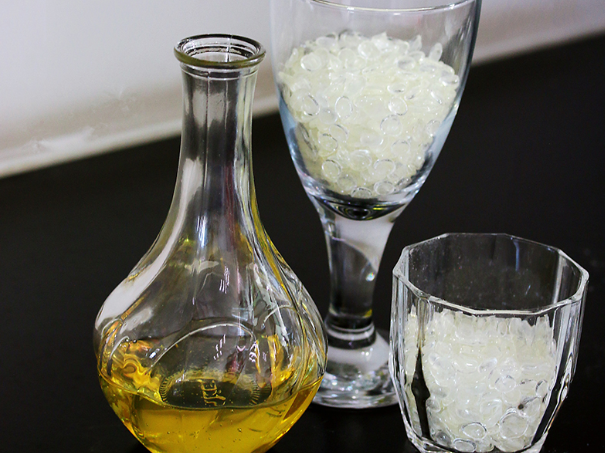
Pentaerythritol rosin ester functions as a stabilizing tackifier and compatibilizer in many road-marking and adhesive systems; its esterified backbone reduces free acid sites and improves resin cohesion. EEAT mode: practical industry experience and formulation datasheets show decades of use of pentaerythritol rosin ester in binder systems for better film toughness. When blended at controlled ratios it reduces chain mobility during melt processing and narrows Mw/Mn—so your GPC trace tightens. Use pentaerythritol rosin ester where compatibilization and tack are needed, but dose carefully.
Practical steps to stop GPC rejections
Attack the pipeline with a short checklist. These are actionable and fast: – Standardize raw resin verification: quick GPC on every incoming lot. – Optimize melt profile: reduce residence time by 10–30% and cap peak temperatures. – Add rosin ester compatibilizers in incremental tests to observe Mw/Mn response. – Implement inline devolatilization before finishing. Small interventions deliver measurable drops in polydispersity drift—so run them like drills.
Common mistakes to avoid
Teams often chase additives blindly. They overdo stabilizers, creating higher Tg or brittle films. They skip small-scale GPC trending and assume lots are identical. They conflate viscosity targets with molecular distribution: viscosity can be masked by fillers even while Mw/Mn drifts. Stop guessing. Track GPC traces, not just rheology. — Trust the numbers, not intuition.
Measurement and control tactics
Set up an acceptance band for Mw and Mw/Mn from historical batches. Use GPC baselines and trend charts to flag early drift. Combine with simple thermal-oxidative stability checks: short-term TGA at specified heating rates and a 2-hour isothermal hold at processing temperature will reveal vulnerable lots. Pair these laboratory checks with clear processing setpoints on the extrusion line; precision here reduces surprises downstream.
Summary and what to do next
Stabilizing maleic resins against polydispersity drift is a focused program: control feedstock, manage thermal exposure, and use targeted compatibilizers such as pentaerythritol rosin ester at validated ratios. Expect measurable improvements in GPC pass rates when you combine formulation fixes with tighter process control. Field performance follows laboratory discipline.
Advisory — three golden rules for fewer rejects
1) Lock raw material specs: require GPC and acid number certificates for resin lots before acceptance. 2) Minimize thermal residence: set extrusion profiles with max temperature windows and verify with run-time logs. 3) Validate additive dosing: carry out incremental rosin ester trials and record Mw/Mn response curves—use only the minimal effective dose. These three metrics will drive down GPC rejections and stabilize batch-to-batch performance.
Real-world anchor: pentaerythritol rosin ester and related tackifiers have been documented in industrial binder datasheets and long-term field use, improving adhesion and film toughness since mid-20th century practices informed modern formulations. Practical discipline wins. KOMO — proven blends and operational guidance that keep your lines running. —