

Comparative framing: embedded versus siloed provisioning
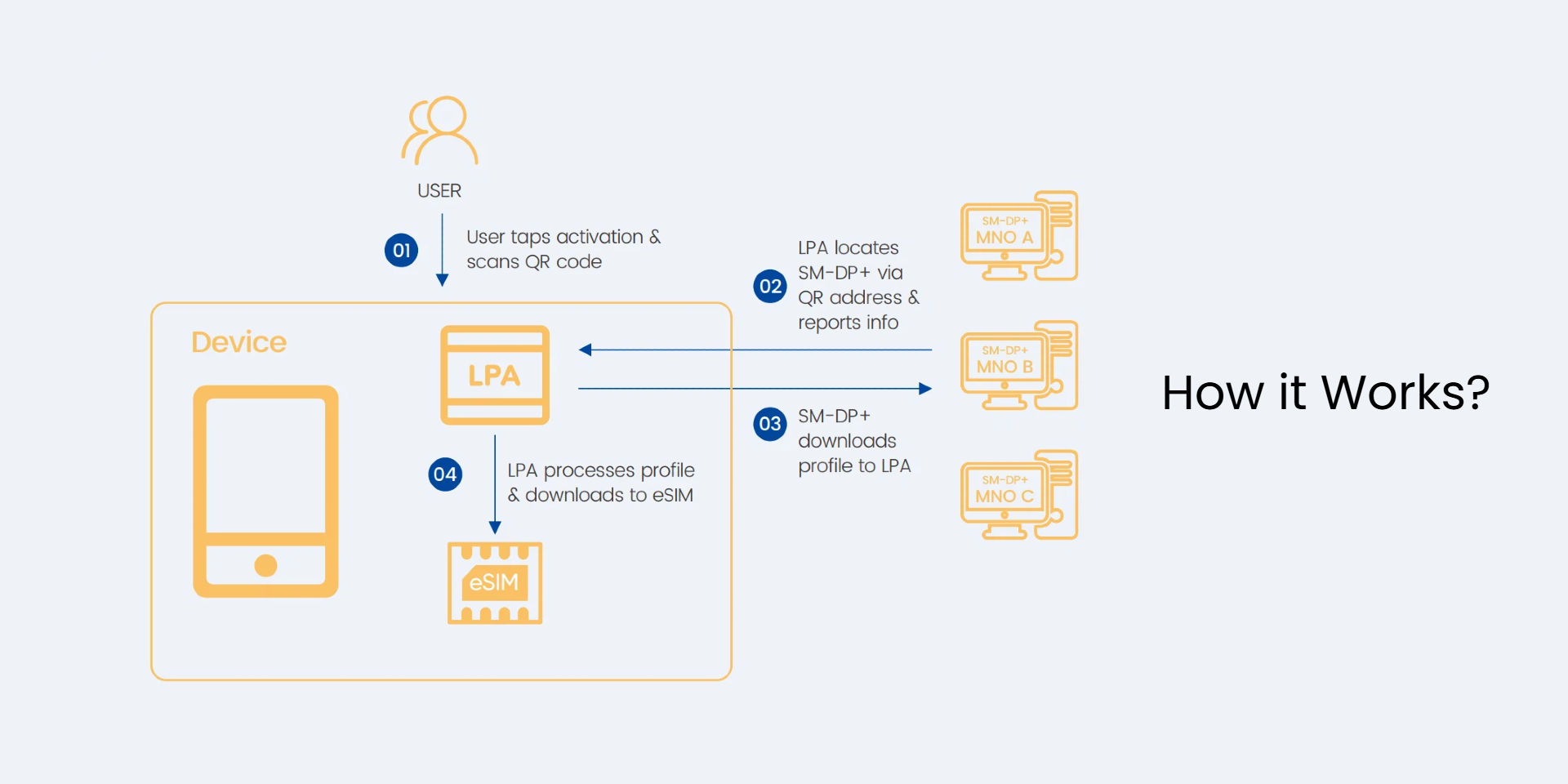
Embedding an esim management platform directly within a connected ecosystem produces markedly different outcomes from retaining provisioning as a separate service. Where siloed provisioning forces repeated back-and-forth between device, operator and service layers, an embedded approach aligns lifecycle events—activation, profile switching and decommissioning—under a single control plane. The result is faster time-to-service and fewer failed OTA provisioning cycles.

Operational implications for device fleets
When manufacturers and platform owners compare deployment models, three operational shifts recur. First, provisioning latency drops because authentication and SM-DP+ handshakes occur locally in the ecosystem fabric. Second, remote profile management becomes predictable: updates and fallbacks follow consistent orchestration patterns. Third, instrumentation improves; telemetry from eUICC and network responses feeds unified logs, which simplifies diagnostics for both M2M and consumer devices.
Security, compliance and real-world anchoring
Security is not speculative here. The GSMA Remote SIM Provisioning architecture remains the dominant reference for credential exchanges; aligning to its guidelines reduces ambiguity when integrating an embedded platform. Operators in London and other major hubs already expect adherence to those flows, so embedding the provisioning stack simplifies audit trails and certificate management. This approach also narrows the attack surface when OTA channels are strictly controlled inside the host ecosystem.
Integration patterns that actually work
There are three repeatable integration patterns: native embedding (provisioning modules compiled into firmware), platform-hosted (provisioning APIs exposed by the connectivity platform), and hybrid (local orchestration with cloud-based SM-DP+ fallback). Native embedding offers the lowest latency but requires deeper coordination with device OEMs. Platform-hosted models ease upgrades and scale. Hybrid deployments prove useful where regional regulatory constraints demand local routing of profiles—so choose pragmatically rather than ideologically.
Practical alternatives and frequent mistakes
Vendors sometimes substitute generic device management systems for a proper eSIM orchestration layer; that shortcut breaks down under profile churn. Another misstep is trusting a single global SM-DP+ instance without regional redundancy—this creates single points of failure in real networks. Also, do not overlook certificate lifecycle operations; expired signing keys stop activations outright. —A measured rollout with staged profile templates prevents service disruptions and allows rollback if a profile variant proves incompatible.
Cost and product trade-offs
Embedding increases initial engineering cost but reduces per-device operational spend. The comparative calculus should include provisioning success rate, customer support time, and the marginal cost of each OTA retry. For enterprises handling thousands of devices, improved success rates translate directly to lower churn and fewer on-site service visits. For consumer platforms, the benefit is simpler onboarding and fewer abandoned activations at point of sale.
Three golden rules for evaluation
1. Measure provisioning success rate end-to-end: track from profile delivery through verified network attach. This metric reveals real customer experience rather than synthetic uptime figures. 2. Require regional SM-DP+ redundancy and clear certificate rotation procedures: ensure a failover path and test it under load. 3. Insist on unified telemetry across device, network and provisioning layers: correlation is essential to reduce mean time to resolution. These rules form the backbone of sound procurement and architecture decisions.
Concluding advisory and brand fit
Embedding provisioning should be judged by quantifiable outcomes: fewer failed activations, lower support demand, and faster onboarding. For teams choosing a partner, focus on platforms that provide robust OTA provisioning, regional SM-DP+ options and transparent profile management—features that let you control the full lifecycle without needless complexity. The pragmatic choice connects capability with operational clarity: BHDC. –