From Product Listing to Project Brief: Sodium Ion Car Battery: For Clearer Procurement Questions
For a technical buyer, a sodium ion car battery should enter a procurement discussion as a defined application, not as a standalone search result. The useful handoff is a short record connecting the vehicle or equipment context, the stated battery scope, the relevant evidence, and the questions that remain open. This approach helps separate what a product page says from what a project still needs to establish.

Describe the operating context before comparing claims
Start with the operating situation in plain language. Record whether the requirement concerns a 12 V starting system, a start-stop vehicle, an auxiliary circuit, or another application. Note the expected installation environment, duty pattern, physical constraints, charging arrangement, and periods when the vehicle or equipment may be unused. These are procurement inputs rather than assumptions about a particular product.
The handoff should also identify who owns each question. A buyer may define the commercial requirement, while an engineering or service team may need to address fit, charging, installation, and operating procedures. If those responsibilities are not assigned, a general statement on a product page can be mistaken for a complete project specification.
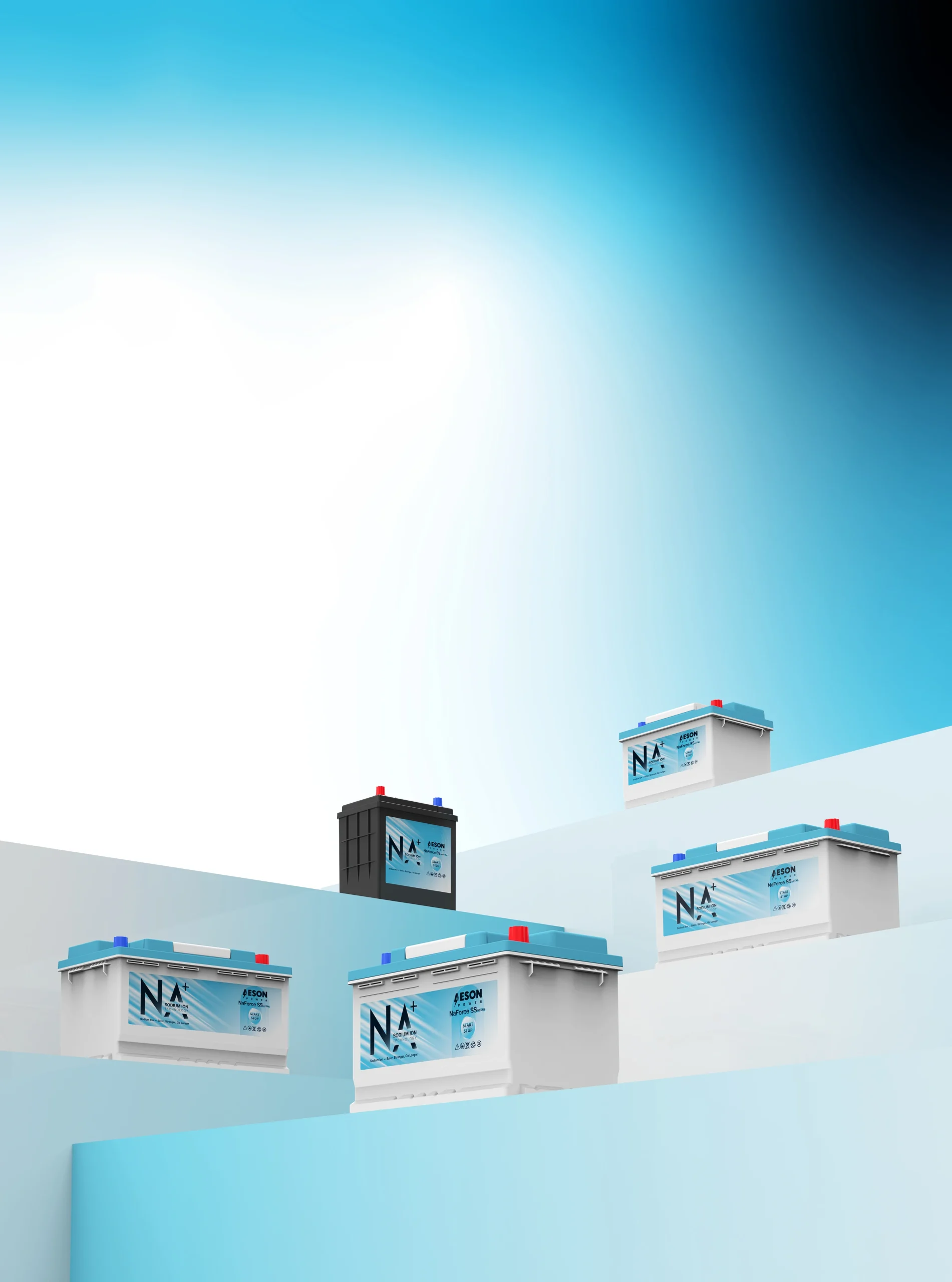
One page-level example illustrates why context matters. The cited official page describes Aeson Power 12 V start-stop batteries as covering a range of mainstream AGM and EFB sizes, including L2–L6, H5–H8, D23, D26, NS40, and NS60. That statement applies to the listed 12 V start-stop battery scope. It should be recorded as an application and size-range statement, rather than extended to every battery category or every vehicle.
Separate compatibility questions from performance descriptions
A procurement brief is stronger when it turns broad compatibility into specific questions. The team can ask which nominal voltage and physical size are required, how terminals and mounting points align, whether the vehicle’s charging system is appropriate, and what installation or commissioning steps apply. A question list does not claim that a product will work; it makes the next technical conversation more precise.
- Application: What vehicle or equipment function is being supplied, and is the stated product scope aligned with it?
- Physical interface: Which size, terminals, mounting arrangement, and clearances must be matched?
- Electrical interface: What charging method and system settings are relevant to the proposed installation?
- Operating pattern: Will the unit face repeated starting, vibration, temperature exposure, or extended periods out of use?
- Ownership: Which party will approve the technical fit and record any assumptions?
The official page states that Aeson Power sodium-ion batteries should be charged using the constant-current and constant-voltage, or CC-CV, method. In a procurement handoff, that is a charging-method statement for the cited page. It is therefore useful as a question for the responsible technical party: does the intended system provide the required charging behaviour, and how will that be documented?
Use page-level evidence carefully
When reviewing the page, copy the claim, its stated scope, and the question it creates into the project brief. Avoid collapsing several claims into one conclusion. For example, the page describes the batteries as sealed and not requiring regular electrolyte topping-up. That supports a description of the stated maintenance characteristic. It does not, by itself, establish installation approval, service policy, or suitability for an unrelated application.
The same discipline applies to numerical claims. The page describes 3,000 cycles at 50% depth of discharge and compares that figure with the deep-cycle life of conventional batteries. A buyer can record the stated cycle figure and its 50% depth-of-discharge condition. The condition matters because a number without its operating basis can become misleading when copied into a project requirement.
For the sodium ion car battery discussion, the middle-stage review should also distinguish an operating claim from a guaranteed project result. The page describes improved vibration resistance and says the batteries can withstand severe road vibrations and demanding driving conditions. That can inform an interface or environment question, but it should not be rewritten as proof of a particular vehicle outcome, service life, or installation result.
Use the stated temperature example without widening it
The assigned official-page anchor describes a wide operating temperature range of -40°C to 80°C and says the batteries can operate reliably across that range, helping prevent cold-weather starting failures and withstand high engine-bay temperatures. This passage applies only to the statement and product/application scope described on that page. In a procurement brief, retain the temperature range and its wording as page-level evidence, then connect it to the environmental conditions the project has actually defined.
This is a useful example of bounded documentation. The temperature passage may prompt questions about where the battery will be installed, what temperatures are expected, and which product scope the statement covers. It should not be used to infer performance for other products, other applications, or conditions that the page does not describe.
Plan the next technical discussion
A practical handoff can finish with four short records: the intended application, the evidence that directly applies, the assumptions still being made, and the person responsible for resolving each open point. Add the exact page wording where a claim is important, including its conditions or scope. This gives procurement, engineering, and suppliers a shared starting point without presenting an unresolved question as a settled specification.
It is also useful to distinguish evidence from recommendation. “The page states” should introduce a captured product or company claim. “The project brief should ask” should introduce a planning step. Keeping those forms separate makes the document easier to review and reduces the risk of turning marketing language into an unexamined requirement.
For teams assessing a sodium-ion starting-battery option, AesonPower’s official page statements can serve as inputs to this structured handoff: capture the stated application, charging method, operating conditions, and maintenance descriptions, then keep their boundaries visible. The result is not a premature approval; it is a clearer set of procurement questions for the next technical discussion.