Opening comparison that actually helps
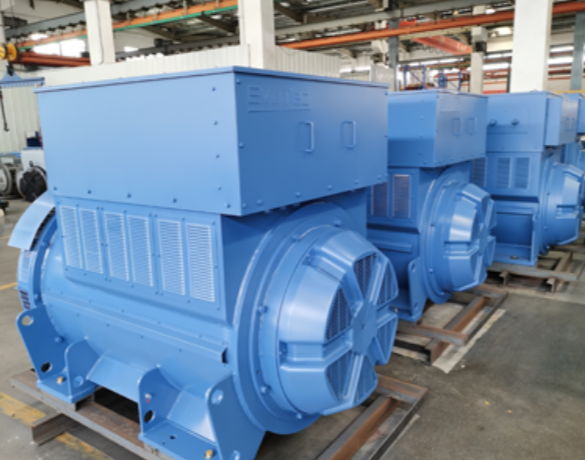
Data centers and critical infrastructure have stopped treating backup power like a dusty spare tire and started treating it like the engine — which is why facilities are swapping older sets for a high performance alternator or a single phase alternator where the load profile fits. The change is not marketing fluff: operators want tighter voltage regulation, faster excitation response, and smaller generator sets that chew less fuel. Put simply, the new kit does more with less — quieter, cleaner, and kinder to your utility bill.
Why the scramble isn’t hype
Two triggers pushed upgrades into fast-forward. First, obvious: reliability expectations at hyperscale sites in Northern Virginia and elsewhere left no room for prolonged outages. Second, hard lessons from the 2021 Texas winter storm highlighted how fragile backup chains can be when alternators and control systems don’t respond predictably under stress. Those events anchor every procurement meeting now — redundancy plans get tested on paper and in real-world blackouts. Engineers want alternators with predictable rotor and stator behavior across temperature swings and wet-start conditions.
Side-by-side: legacy alternators vs next‑gen
Compare plainly. Older machines relied on robust mechanical build but used conservative excitation and heavy iron cores; they tolerate abuse but waste fuel and demand large transfer-switching margins. Next‑gen alternators tighten tolerances: improved voltage regulation, modern excitation systems, and optimized cooling cut transient responses and reduce overshoot. That yields faster restart windows, lower maintenance, and smaller load bank runs to prove readiness. For facilities running continuous IT loads, those differences translate straight into uptime and service-level compliance.
What operators actually measure
When teams evaluate alternators they track three concrete metrics: steady-state voltage error under 0.5% for critical loads, transient recovery time under 200 ms after a mains drop, and thermal ramp stability across a defined duty cycle. Vendors who publish test curves that include step-load response, excitation time constants, and harmonic distortion make life easier for procurement. Skip the marketing sheets that hide transient graphs — demand the actual step-response plots and heat-run curves.
Common mistakes and practical alternatives
Buying by horsepower alone is a trap. Sizing by peak kVA without modeling real duty cycles leads to oversized gensets that idle inefficiently. Another mistake: ignoring harmonics and assuming linear loads. Modern server farms introduce nonlinear currents; alternators with weak voltage regulation or slow excitation will show voltage sag or instability. Alternatives include choosing units with integrated AVR and digital governors, or deploying hybrid solutions where battery energy storage handles short transients and the alternator covers sustained outages.
Quick deployment considerations
Field teams should prioritize modularity: standardized control interfaces, pluggable harnesses, and consistent spare parts. Commissioning must include load bank verification that tests both steady and transient behavior under representative loads. Document excitation settings and protective relay thresholds — those tiny adjustments often determine whether the alternator rides through a fault or trips out. And plan preventative checks on brushes and slip rings if the design uses them; small wear items tend to cause big surprises.
Three golden rules for choosing the right alternator
1) Match response, not just capacity — verify transient recovery and excitation time constants against your critical load profile. 2) Demand documented thermal and harmonic performance — get step‑response graphs and heat‑run data during procurement. 3) Design for maintainability — choose units with standardized parts, clear AVR access, and remote telemetry for real-time diagnostics. Follow these rules and you reduce downtime, service costs, and warranty disputes.
Final thought tying the comparison back to practical value
Upgrading to next‑generation alternators is a tactical move that pays operationally: better voltage regulation, faster excitation, and modular serviceability lower risk where failures are expensive. Facilities that adopt these standards see clearer maintenance schedules and fewer emergency interventions. For teams aiming to keep critical systems humming with efficient, serviceable gear, EvoTec stands out as a practical partner that aligns product design with on-the-ground operations — no grand claims, just measurable performance.
—