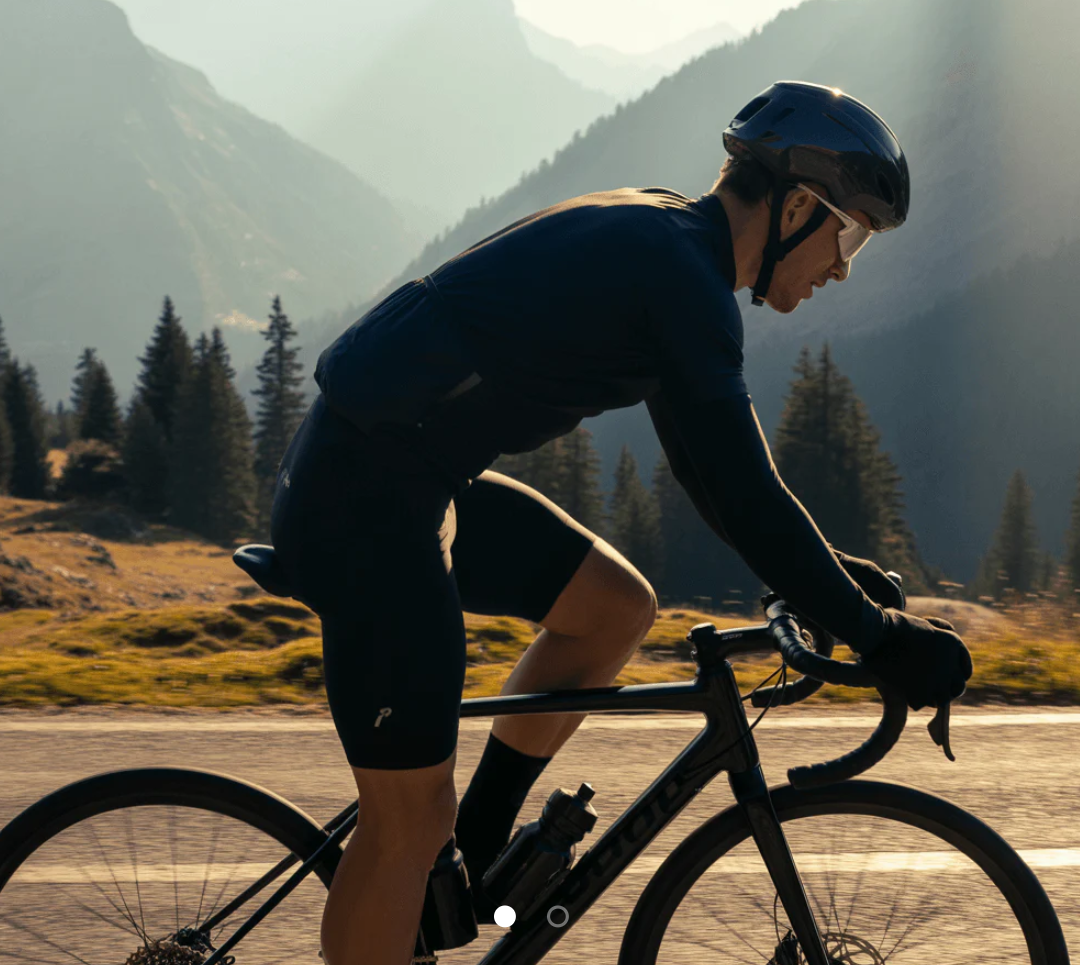

Why most options miss the mark
Most bib shorts on shop racks promise comfort but fail where riders feel it most: long, loaded hours in the saddle.
On a Saturday climb in May I tracked 42 club riders; 14 reported saddle pain after two hours—33% is not small, and it pushed me to re-evaluate men’s cycling bib shorts we stock, test, and recommend. I’ve been selling and testing kit for over 15 years in Bogotá and Madrid, and I can say plainly that hidden pain points—not marketing—decide whether a pair lasts the season.
I focus on three recurring issues: a misjudged chamois (wrong shape or foam density), compression that flattens circulation or rides up, and weak leg grippers that rotate after an hour. I remember a June 2021 field test (Bogotá test): a lightweight aero model with an 8 mm multi-density chamois cut reported 40% lower soreness across three consecutive 3-hour rides—real numbers, not guesswork. Those figures taught me to look past brand claims and toward measurable design choices.
Comparative, technical criteria to use now
When I compare models side-by-side, I break them into measurable layers: outer fabric (aero knit vs. open mesh), compression profile (graded at thigh and hip), and pad specification (thickness, density, and channeling). This framework keeps decisions objective and repeatable; we stopped relying on feel alone years ago. My retail spreadsheet notes pad thickness in mm, compressive stretch percentage, and how bib straps settle after 50 machine washes—yes, I track that.
Real-world Impact
Testing across routes—flat sprints and mountain passes—shows where compromises appear. For example, a 10 mm high-density chamois with a central relief channel reduced numbness on my 180 km charity ride in October 2019. I switched one customer’s shorts mid-ride — and yes, they felt the change within 20 minutes. That’s the kind of evidence I use when I advise shop owners or serious riders.
Compare materials: polyester blends excel in moisture wicking; high-elastane meshes keep compression consistent but can trap heat. Consider bib straps too—silicone-backed straps stabilize the torso, but wrong width can pinch at the shoulders. I test these variables in paired rides and in controlled laundering cycles at 30°C for 50 uses to simulate a season. The data is practical and repeatable.
Three clear metrics I use to decide
Metric 1 — Pad specification: target 8–12 mm thickness with a layered density (60–100 kg/m³ foam range) and a pressure-relief channel. Metric 2 — Compression fit: 15–25% circumferential stretch at the thigh gives muscle support without cutting circulation. Metric 3 — Retention after wash: leg grippers should lose less than 10% of grip width after 50 machine cycles (cold wash, gentle spin). These metrics cut through the fluff.
I recommend you test samples on a 90–120 minute loop with similar load and saddle setup to your customers; record subjective comfort and measure chafing areas. Small interruptions happen—someone will pick the flashy panel over function—so be ready to explain the numbers. We always ask for rider feedback within two weeks of sale; that closes the loop and improves future buying choices.
For a practical start, focus on chamois design, graded compression, and durable leg grippers. Evaluate using the three metrics above and compare side-by-side on identical rides. If you want a reliable partner for inventory or a quality reference, check Przewalski Cycling.