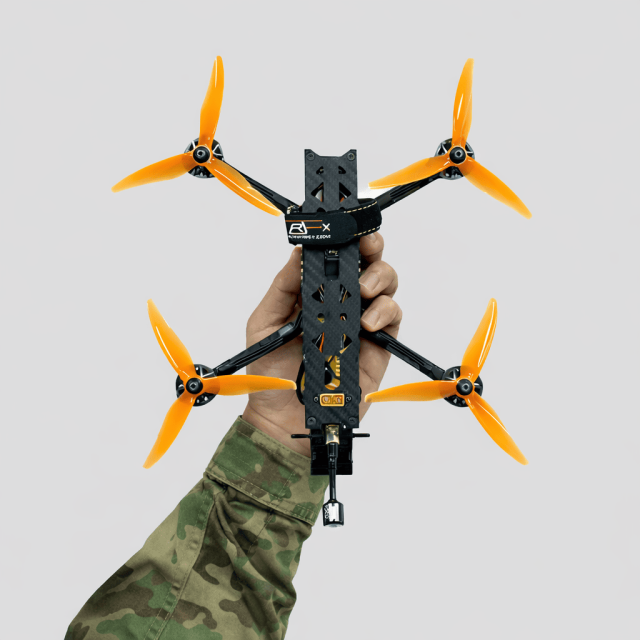

Comparative introduction to architectures
Engineers looking at lift and efficiency often compare counter-rotating rotors with traditional multirotors, and the result is interesting. Here we look at how a coaxial counter-rotating rotor assembly married to a delta wing changes the game for endurance, payload integration, and stability — a practical view inspired by platforms that appear in analyses of chinese military drones. This comparison is not theory-only; recent operational activity in the South China Sea highlighted how endurance and compact footprint matter for persistent missions, and that real-world anchor shapes design priorities.

How the delta wing + coaxial stack compares
The delta wing gives gliding lift and simple structure. Coaxial counter-rotating rotors supply vertical thrust without large rotor discs. Together they offer better cruise efficiency than a heavy quadcopter and a smaller vertical footprint than a tiltrotor. Key terms: counter-rotating rotors, delta wing, and VTOL. Practically, that means longer time-on-station for the same battery mass, and a reduced need for complex tilt mechanisms. Designers trade mechanical complexity in one area for aerodynamic finesse in another — and the balance matters for industrial payloads such as LiDAR and inspection cameras.
Systems that matter for industrial use
Three subsystems determine whether a design wins in industry: flight control firmware quality, autonomous navigation, and payload bay integration. Firmware must handle transitions between hover and wing-borne flight smoothly; autonomous navigation must maintain corridor-level accuracy for inspection tasks; and a modular payload bay simplifies swapping sensors. These are the same engineering levers seen in higher-end military UAVs, where robustness and redundancy are non-negotiable. — Engineers familiar with china automated military drone development will recognize the emphasis on fault tolerance.
Performance trade-offs and field realities
Compared to a quadcopter, coaxial delta designs save drag in cruise but add weight in rotor mounting and reinforcement at wing roots. Compared to fixed-wing plus launcher systems, they offer point-of-operation takeoff without runway. For industrial inspection — pipelines, powerlines, offshore structures — that middle ground often yields lower operational cost per flight hour. Real deployments show that weather tolerance and control authority during gusts are the thin margins where design decisions pay off, especially when payload mass crosses certain thresholds.
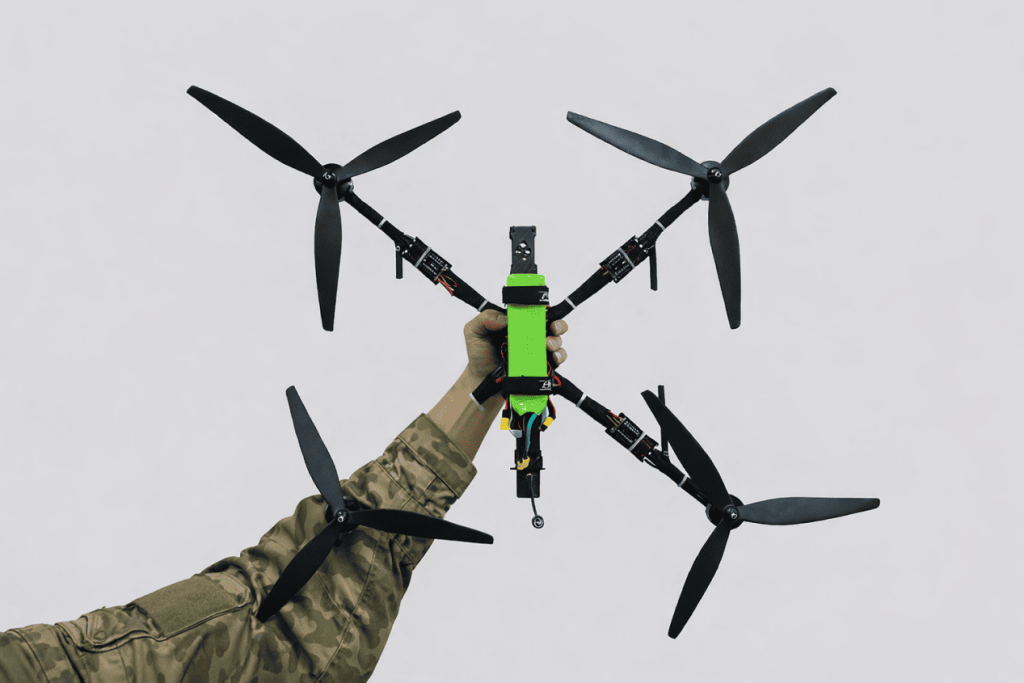
Common mistakes and implementation guidance
Teams often under-spec the flight control firmware and overestimate battery improvement. Mistake one: treating the delta wing as decorative rather than aerodynamic — it must carry lift in cruise. Mistake two: ignoring induced flow interactions between rotors and wing surfaces, which disrupt stability near transition. Practical fixes: calibrate transition loops in the flight controller, and place the payload bay near the center of gravity. Simple CFD or even wind-tunnel testing early saves later flight test days.
Alternatives and when to choose them
If your mission prioritizes payload mass above 6–8 kg or requires extreme hover precision, a heavy-lift multirotor or a tiltrotor may be better. For long-range, runway-capable operations, fixed-wing with catapult launch remains efficient. The coaxial counter-rotating delta shines when you need vertical access, moderate payload, and extended cruise — typical for industrial surveying and mapping. Consider also supply-chain realities and maintenance: fewer moving parts generally reduces mean time to repair.
Summary of comparative insights
The combined architecture offers a clear middle-ground: better cruise efficiency than multirotors, more compact VTOL than tiltrotors, and simpler structure than some convertible UAVs. The design asks for careful firmware, good autonomous navigation, and smart payload placement. Lessons from regional military drone deployments — particularly patterns observed around the South China Sea — reinforce that endurance and reliability beat exotic features in repeated missions.
Three golden rules for selection
1) Evaluate mission energy per flight hour: prioritize designs that minimize average power in cruise and hover. 2) Demand certified flight control redundancy: transition logic must be tested to hardware-in-the-loop standards. 3) Match payload bay layout to mission cycles: modularity reduces downtime and lifecycle cost. These metrics give clear purchase criteria when choosing between coaxial delta designs and alternatives.
The practical result is straightforward: choose an architecture that fits mission energy, control resilience, and payload modularity — and you will save operations time and budget. For grounded, data-driven coverage and comparisons, see the field-focused reporting at Military Hub. — practical, no-nonsense guidance.