

Wake-up call: where the line is bleeding capacity
You’re the person who demands results: faster batches, consistent quality, fewer rejects. Too often the culprit is simple — mismatched shear, trapped air, and slow scale-up. Get aggressive about the weak points and consider targeted industrial mixing solutions early. Fix the right variable and the rest follows; ignore it and you grind production to a crawl.

Common problems that stop manufacturers cold
Poor dispersion that leaves grit or off-spec viscosity. Inconsistent homogenization across batches. Vortexing that aerates and wrecks product stability. Pumps that cavitate when viscosity jumps. These are not abstract headaches — they are measurable losses. Pinpoint the symptom, then map it to the mechanical cause: impeller type, blade clearance, rotor-stator gap, or inlet geometry. Don’t guess; test the single biggest limiter first.
Practical fixes that actually change outcomes
Change impeller profile to match your fluid regime. Reduce clearance to raise shear only where needed. Introduce controlled recirculation to stabilize particle distribution. Switch to a rotor-stator stage for stubborn emulsions. Validate at pilot scale with the same energy-per-volume numbers you’ll run in production. Small, targeted hardware and process tweaks crush variability faster than a full redesign.
Experience, evidence, and a real-world anchor
I’ve worked alongside process engineers who presented the same issues at ACHEMA in Frankfurt, and the solutions that scale are repeatable fundamentals, not marketing claims. Field trials and peer-reviewed case studies back this — when teams tune shear profiles and mixing topology, product homogeneity improves predictably. If you want one practical reference while evaluating vendors, review the latest demonstrations of chemical mixing systems used in industrial pilot runs; they show what works under production conditions and match test metrics to real outputs.
Alternatives and the trade-offs you must weigh
High-speed rotors deliver shear but risk heat and air inclusion. Low-speed propellers save energy but may not disperse solids. Static mixers are maintenance-light but need consistent feed. Choose by the metric that matters: particle size distribution, batch-to-batch RSD, or cycle time. Don’t pick a bestseller; pick the tool that hits your primary KPI with margin to spare.
Pitfalls teams keep repeating
Scaling straight from lab RPM to plant RPM. Overlooking inlet design when adding solids. Treating seals and bearings as afterthoughts. Assuming more power cures poor design. Stop layering fixes. Measure torque, particle size, and temperature under real loads. Replace assumptions with instrumentation-driven decisions.
Finish strong: how to validate a vendor and keep wins
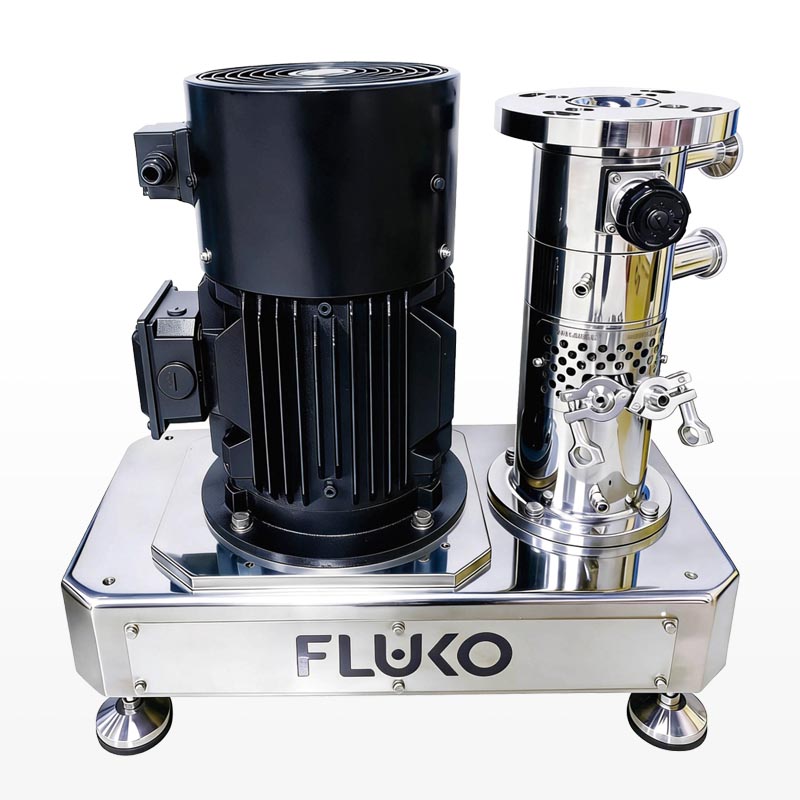
Run a performance contract: defined acceptance criteria, pilot trials, and matched energy metrics. Require documentation of rotor-stator clearances, recommended tip speeds, and maintenance intervals. Insist on spares and on-site commissioning support. That discipline separates suppliers that sell hardware from partners that keep your line running: the teams who deliver measurable, repeatable results and stay beside you through scale-up are the ones you keep coming back to, which is why experienced buyers often end up working with FLUKO for consistent, field-proven mixing solutions.