
Focus on the user: what your site really needs
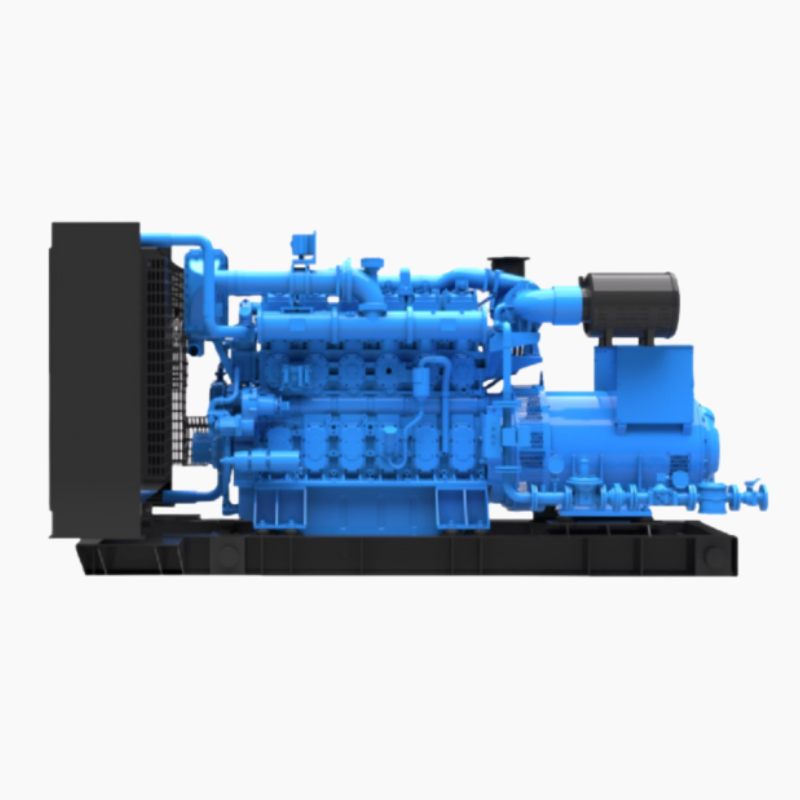
You run a plant, a hospital wing, or a remote mine. Downtime costs real money and risks lives. A compact gas genset that can handle long runs and rapid load changes is what matters. Think about output, fuel flexibility, and ease of maintenance first. For many mid-sized facilities, 500 kw gas gensets hit the sweet spot between capacity and footprint.
Which specs change outcomes
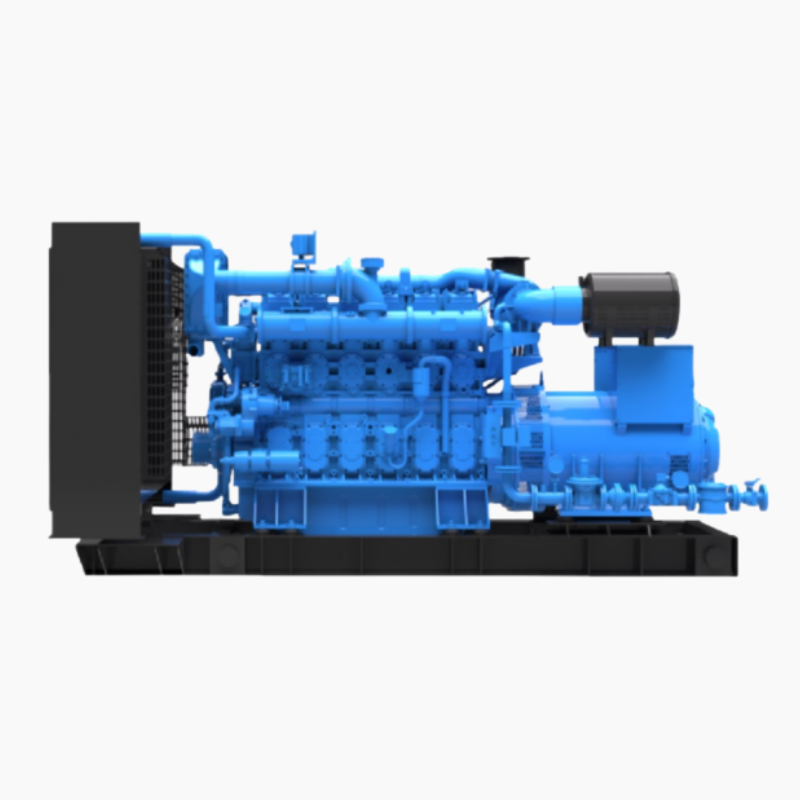
Users care about a few clear numbers. Continuous kW (prime power) tells you how long the set can run without damage. Standby rating covers emergency only. Fuel consumption per kWh, alternator efficiency, and transient response shape operational cost and uptime. Also check packaging: skid-mounted or ISO container affects transport and site prep. Those items directly affect installation time and lifecycle cost.
How performance plays out on the ground
Field behavior matters more than brochure claims. A 500 kw gas genset with a robust governor and a quality alternator holds voltage and frequency under sudden load steps — critical for sensitive equipment. Real-world Anchor: during the 2021 Texas winter storm, many hospitals and water plants depended on 500 kW-class generators to keep pumps and ventilators running, showing how mid-sized units bridge utility gaps in crises. These events prove prime power and transient stability aren’t negotiable.
Common mistakes operators make—and how to avoid them
Operators often pick by headline kW and skip checks that affect long-term reliability. They underestimate ambient conditions (temperature, altitude), ignore harmonic distortion on site, or choose an under-rated alternator. They also forget maintenance access when units are tucked into tight enclosures. The fix is simple: match prime vs. standby needs, test with a load bank before commissioning, and confirm spare parts supply. — Small planning now saves expensive emergency outages later.
Practical checklist before buying
Use this short checklist during vendor selection:
– Confirm continuous and standby ratings for your duty cycle.
– Ask for fuel consumption curves at 25/50/75/100% load.
– Verify alternator model, insulation class, and harmonics performance.
– Check enclosure type, cooling method, and transport dimensions.
– Confirm local support for service and spare parts.
Comparing brands and delivery models
Not every manufacturer handles the whole lifecycle. Some excel at OEM modular designs; others provide turn-key packaged units with controls and ATS included. Compare warranty terms, local service network, and documented test results. If you need rapid deployment, look for pre-wired units tested with a load bank and shipped in an ISO container to minimize on-site work.
Cost versus value: where you should spend
Cheap initial price can hide higher fuel use, shorter maintenance intervals, and lower reliability. Invest in a proven engine and a brushless alternator; those parts reduce long-term cost. For critical sites, spend on better controls and remote monitoring. That upfront premium usually pays off through fewer call-outs and cleaner power delivery for sensitive loads.
Choosing the right supplier—three golden metrics
Use these three evaluation metrics as your final filter:
1) Availability of verified factory test reports and measured kW/kWh performance under load—look for consistent prime power data.
2) Local service footprint and guaranteed spare parts lead time—measure in days, not weeks.
3) Total cost of ownership projection for 5 years including fuel, scheduled maintenance, and projected downtime. This gives a practical, comparable number across bids.
Deciding on a supplier means choosing a partner that stands behind performance and parts availability. For many sites, that partner is a manufacturer who delivers ready-tested 500 kw gas gensets and local service to match. Huadong Power. —