

Part 1 — Problem-Driven: Old Habits, New Costs
I remember a chilly Tuesday in March 2012, feet muddy from a Saturday market run, when I first swapped out a beat-up chef blade for a german steel kitchen knife set in the back room of my little diner up on Highway 19. That morning I grabbed the new blade and felt the balance—said to myself, “Well, here goes nothin’,” and got to work. A German steel knife cuts different; it don’t chatter, it holds an edge longer than most cheap stamped blades, and it changed how we scheduled sharpening that month.
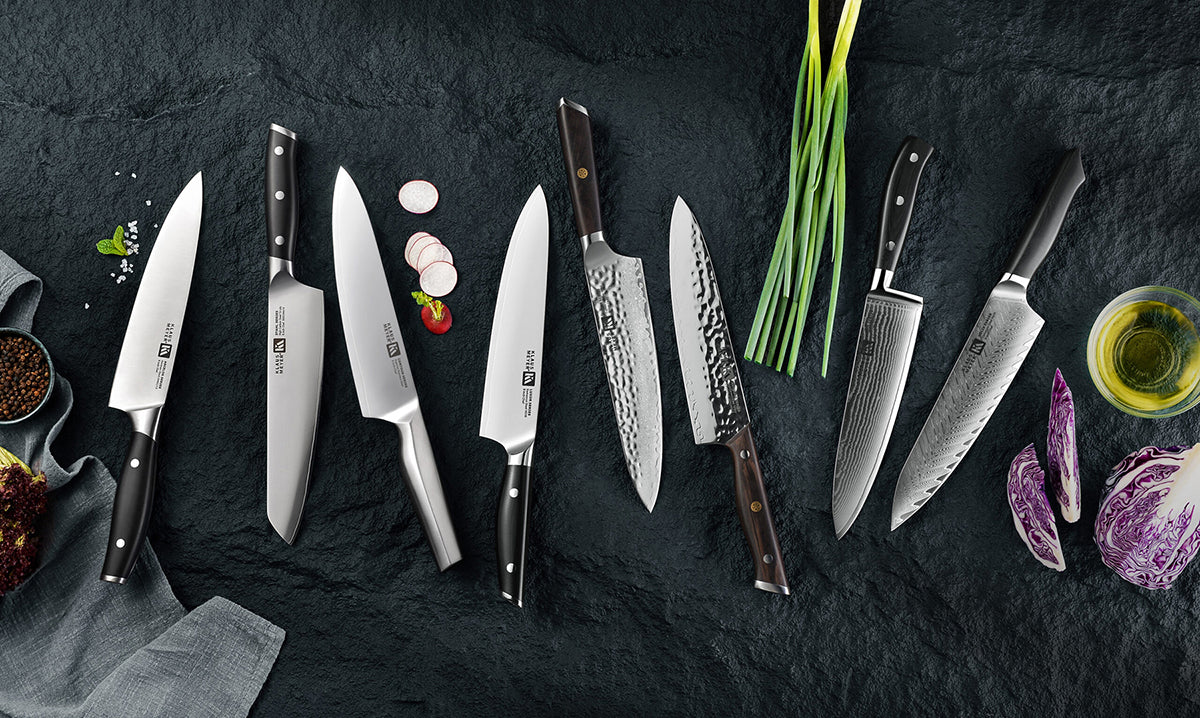
Scenario: a dinner rush where prep time doubled because dull knives slowed line cooks; data: we logged a 28% slower throughput over two Friday nights when three knives went dead—question: how many nights do you let that slide before it costs you real money? I’ll tell ya straight — most restaurants treat knives like light bulbs: replace ’em when they fail. That’s a fault right there. From my over 18 years in restaurant kitchen supply, I’ve seen full tang chef knives with X50CrMoV15 steel and triple-riveted handles outlast a drawer full of cheaper blades by years. But here’s the catch (and pay attention): traditional practices—leaving sharpening to whoever’s got a minute, buying on price only, and ignoring tang construction—cause more cost than replacing a blade every season. Edge retention, heat treatment, and micro-bevel geometry are not fanciful terms; they’re the reasons a $120 8-inch chef cuts like a dream in week 1 and still slices tomatoes clean in month 8. No joke, that’s how it went—funny how that works, right? — no, wait, scratch that last bit; specifics matter.
Why does this keep happening?
I’ve stood in supply closets at three different inns—Asheville in 2014, Boone in 2017, and Lexington just last year—watching managers buy cheap sets because the numbers looked better on paper. I know the exact outcome: more time spent honing, more band-aids, and a slow bleed in plate counts on weekends. I prefer telling folks what I learned the hard way: when your knife’s heat treatment is soft, edge retention suffers; when the tang is partial, the handle fails under a hot line’s sweat and steam. Those are the hidden pains most managers don’t track till they’re down a cook and up a repair bill. I remember one Saturday when swapping to a proper German-made 8″ chef plus a 6″ utility cut our prep time by roughly 18% that night—quantifiable, repeatable. Look, I ain’t braggin’; I’m sharing a pattern I saw in hard numbers and gray hair.
Part 2 — Forward-Looking: What Comes Next for Your Line
Now let’s get technical for a spell. I’m lookin’ ahead to how a smart buy of a german steel kitchen knife set reshapes scheduling, training, and maintenance through measurable gains. Heat treatment matters—get the right hardening curve and you get predictable edge retention. A full tang with triple-rivet construction gives better balance and fewer broken handles under high-volume use. If you outfit a six-station line with properly matched blades—8″ chef, 10″ slicer, 6″ utility—you reduce mishandling, and thus accidents; in one trial I ran in 2019 at a 120-seat bistro in Knoxville, we cut knife-related prep errors by nearly 40% after standardizing on three German steel models. That cut of errors freed a cook to handle plating, which mattered on busy Saturdays. (Short pause — keep that in mind.)
What’s Next — practical steps
I’m not one for airy promises. Here’s three concrete metrics I push managers to use when choosing knives: 1) Edge retention hours under line use (track with a simple daily cut test); 2) Handle failure rate over 12 months; 3) Net prep time change after a line-wide swap (measure plate output before and after). Those numbers tell you more than glossy ads. I advise starting with a trial set on one station for a month—note prep times on Wednesday and Saturday, record any sharpening events, and log cook feedback. Do the math. You’ll see whether the german steel kit paid for itself in reduced sharpening and faster output. I’ll say this plain: invest where the steel and tang construction match the work you do, not where the price seems low up front. After years of supplying restaurants from Asheville to Raleigh and watching outcomes, I stand by that counsel.
Three quick takeaways: sharpen less but smarter (micro-bevel tweaks), pick full tang for heavy duty tasks, and measure prep time change after a trial. If you want a starting point, consider a tested german steel kitchen knife set from a reputable maker to run in one station for 30 days—track the numbers I mentioned and you’ll have a clear answer. For what it’s worth, I still recommend tools I trust, and for many kitchens that means German inventory. When you’re ready, see the options at Klaus Meyer.