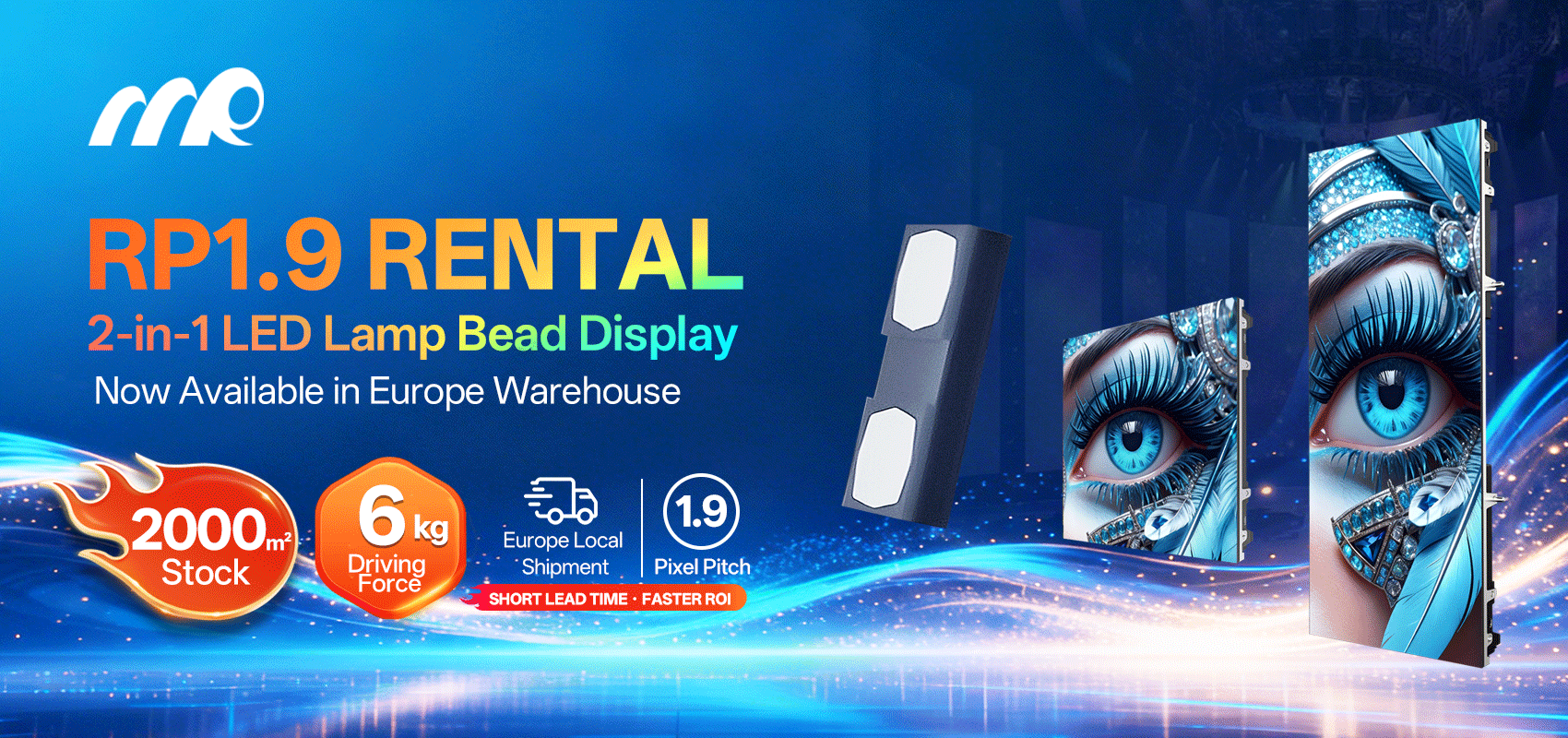

Comparative context: why junction temperature matters for live displays
High-bright event fixtures run near peak power for hours; that raises LED junction temperature and chips lose lumen output and lifetime. Professional integrators know a quality led display screen must balance brightness and thermal control, especially for daytime or stadium work where panels often push beyond 5,000 nits. A simple rule-of-thumb from electronics practice: roughly every 10°C rise in junction temperature can halve expected LED life—so thermal design isn’t optional, it’s a primary specification for reliability.
What MR LED changes in thermal architecture
MR LED reduces junction heat through a layered approach: efficient heat paths on the PCB, high-conductivity thermal interface materials between LEDs and the chassis, and extruded aluminum heatsinks that move heat to the module rim quickly. They optimise the power stage and current distribution to limit local hot spots, and use controlled pulse-width modulation to keep perceived brightness without excessive steady-state current. That mix keeps junction temperature down while preserving lumen output and colour stability during long events.
Side-by-side: MR LED vs common alternatives
Many budget modules rely solely on thin copper planes and small metal plates; they work for short runs but fail under prolonged full-power loads. Active cooling adds fans, which improve cooling but bring failure points and noise—undesirable in concert settings. MR LED’s middle ground uses robust passive sinks plus strategic airflow channels in cabinet design so heat convects away without moving parts. For outdoor deployments, such as a large outdoor led wall at a festival, this reduces maintenance and preserves uniformity across modules better than cheap fan-reliant systems.
Common installation mistakes and practical trade-offs
Installers often compress back-box ventilation with insulation or mount boards tight against non-conductive surfaces; that traps heat at the junction and accelerates failure. Cable routing that blocks convective paths is another frequent mistake. MR LED addresses these with clear cooling channels built into the cabinet and by recommending minimum clearances during mounting—little details that matter. Also worth noting: heavier heatsinks improve dissipation but add weight and cost—so the design chooses conductance efficiency over brute mass, which is preferable for touring rigs and temporary structures.
Real-world anchor: Times Square and high-brightness benchmarks
Think of the LED walls in Times Square: they run near-maximum brightness for long stretches and require ongoing thermal management to keep images consistent. Large venues set a practical benchmark—brightness above 5,000 nits, steady colour, and predictable service intervals. MR LED’s approach mirrors that discipline by prioritising junction temperature control to meet these expectations without resorting to frequent service calls.
How to judge thermal performance — three golden rules
Measure these metrics before you choose a vendor. First, junction temperature under load: request thermal curves at rated brightness and runtime. Second, delta-T across the module: hotspots above the module mean uneven ageing. Third, serviceability under real conditions: ask for deployed case studies or uptime figures from past events. These three checks separate durable solutions from short-term fixes. — They’re practical, measurable, and they protect budget and reputation.
Closing notes on value
Good thermal design keeps brightness stable, reduces service interventions, and extends useful life; MR LED’s layered dissipation strategy delivers on those points with pragmatic engineering and field-minded choices. For integrators who need predictable performance and fewer surprises, MR LED.—reliable by design.