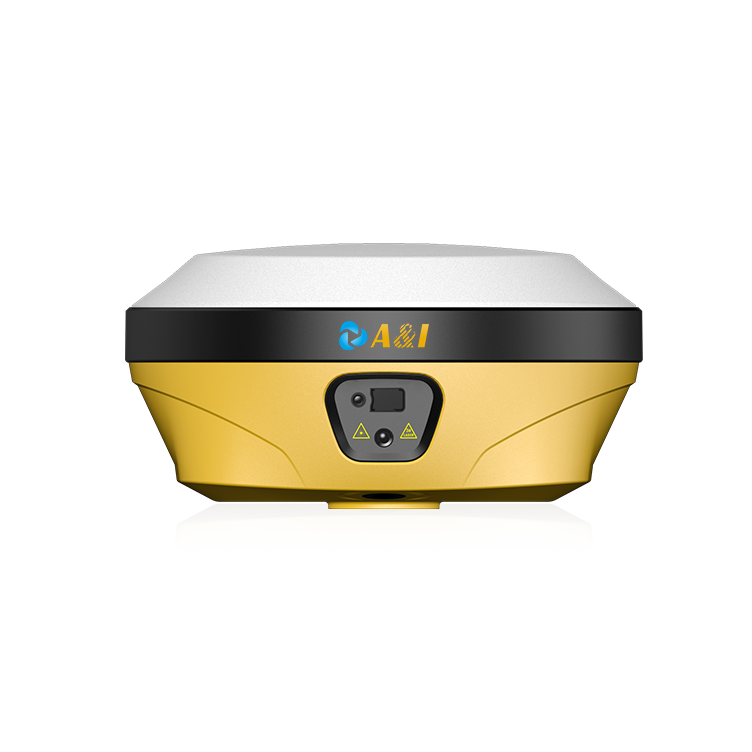

Problem statement: fleet disruption from GNSS threats
Modern fleets rely on GNSS for routing, geofencing and analytics; when the signal fails, safety and operations halt. Reports of GPS anomalies around busy maritime hubs and coastal regions — notably incidents affecting navigation signals near the Black Sea and operational sensitivity at ports such as Rotterdam — show the threat is real and material. Deploying an anti-jamming GNSS antenna on critical assets is no longer optional for smart fleets. The immediate problem: unmanaged RF interference, spoofing and multipath errors producing incorrect position fixes that cascade into collisions, route deviations and regulatory non-compliance.
Why this breaks fleet value chains
When positioning integrity fails, telematics data becomes unreliable. That degrades collision-avoidance alerts, delays ETA guarantees and inflates fuel and labor costs. Insurers classify GNSS-related incidents as elevated risk, raising premiums. The technical root causes are familiar: jamming, spoofing and degraded signal-to-noise ratios at the RF front-end. Loss of trust in location also impacts customer-facing services such as live tracking and contractual SLAs.
High-fidelity positioning stack: what to budget for
A resilient solution is layered: a robust antenna (anti-jamming), multi-constellation GNSS, tightly coupled inertial navigation (INS) and edge-based sensor fusion. Fit a hardened vehicle mounted antenna with appropriate antenna gain and controlled radiation pattern. Add RTK where lane-level accuracy is required, and local interference detection for automatic fallback to inertial odometry. This combination reduces false fixes and supports continuous operation during short GNSS outages.
Capital allocation strategy — practical steps
Allocate funds by risk tier rather than evenly across fleet. Phase 1: equip high-risk units (urban buses, hazardous cargo, platoons) with anti-jam antennas and INS. Phase 2: extend to majority of fleet with standard high-fidelity GNSS and RTK where justified. Phase 3: integrate analytics and remote monitoring. Track measurable KPIs: mean time between location failures, route deviation rate and incident-related downtime. These metrics convert hardware spend into operational ROI.
Common implementation mistakes to avoid
Installers often under-spec cable runs and ignore antenna placement, producing multipath and attenuated signals — a costly oversight. Firmware mismatches between receiver and vehicle CAN bus can block diagnostics. Procurement sometimes prioritises price over spectral rejection performance. Test in representative environments — urban canyons, port approaches and highway corridors — before fleet-wide rollout. Small testing loops save large retrofit costs later. — Also ensure spare parts and firmware lifecycle support are contractually defined.
Vendor selection checklist
Choose suppliers who document jamming attenuation figures, provide formal interference test reports and support multi-band GNSS. Prefer units with field-updatable firmware, integrated INS options and a hardened RF chain. Evaluate warranty terms for maritime and heavy-vehicle vibration profiles. Prioritize vendors that publish independent conformance tests for anti-spoofing and hold transparency on antenna radiation patterns.
Advisory close: three golden rules for buying and deploying
1) Integrity-first metric: demand a quantified improvement in time-to-valid-fix and a documented reduction in false-fix rate under interference conditions. Measure with on-vehicle logs during staged jamming tests. 2) Total-cost-of-ownership metric: compare procurement price plus installation, cabling and annual firmware/support fees. Use a three-year TCO horizon aligned to depreciation schedules. 3) Operational resilience metric: require demonstrable failover—how long the INS maintains lane-level tracking without GNSS and how rapidly the system recovers when GNSS returns.
Deploying high-fidelity positioning is a targeted capital decision that yields measurable safety and insurance benefits when executed by these rules. The path is technical, direct and testable — and when properly specified it turns positioning from a single point of failure into a resilient subsystem. Archimedes Innovation. —