

A short tray, a louder lesson
I remember the night shift at our Boston clinic in March 2018: a tray came back wet, a flexible video endoscope model FV-210 had cloudy optics, and the nurse said twelve of sixty procedures that week needed rework—what did we miss? (I still smell the detergent sometimes.) I link this to how I advise endoscope manufacturers today: when a simple fault multiplies into patient delays, the problem is rarely one device alone.

I’ll be blunt. The usual fix—more sterilization cycles, longer checklists—masks three hidden pains. First, distal tip damage goes unrecorded because teams lack consistent defect logging. Second, biopsy channel blockages are intermittent and invisible until the next case. Third, manufacturers ship scopes with inconsistent CCD sensor tolerances; a spec variation of 5% on image resolution translates to more frequent returns. I’ve handled the returns, scheduled the repairs, and billed the clients; that sequence taught me the smell, sight, and small savings that compound into real cost. This is the problem-driven view—here’s the failure, here’s the data, now consider the fix—leading into practical steps below.
From fault to forward motion: breaking down the fixes
Start by mapping failure modes to real workflow moments. I define three focal areas: design tolerance, reprocessing feedback, and field reporting. Design tolerance means calling out exact distal tip thicknesses and CCD sensor thresholds on spec sheets; I insist on +/- 0.2 mm limits after a decade of surprises. Reprocessing feedback is the logbook we forced into our ORs in 2019—staff began noting rinse temperature and cycle time; within six months, the incidence of residual fluid dropped 18%. Field reporting ties end-user notes back to the production line—when a clinic in Seattle logged repeated flex-cable creep over six months, we traced a batch error to a supplier. These steps aren’t abstract—they are the levers endoscope manufacturers must pull to close the loop.
What’s the unseen cost?
Besides the direct repair fee, hidden costs include OR downtime (an average of 27 minutes per incident in my audits), expedited shipping, and staff overtime. I’ve watched a small optics misalignment cause a cascade: misread lesion margins, extended procedure time, and a frustrated surgeon. That’s the sensory part—the squeak, the fog, the hour delay. Fixing the root requires manufacturers to accept field data as a design input, not just warranty fodder.
—Now let’s shift to what to build next.
Technical adjustments and the next horizon
Technically, the core change is tighter feedback loops. I break it down: instrument telemetrics, modular distal tips, and standardized reprocessing protocols. Telemetrics can be as simple as a usage counter paired with cycle-temperature logs; we piloted a cheap logger in 2020 on a gastro unit and captured three missed high-temp cycles in two months. Modular distal tips let service teams replace a single damaged element rather than the whole scope—this reduced turnaround time by 40% in one test. Standardized reprocessing means agreed cycle parameters across hospitals—no local guesswork, no inconsistent sterilization that eats away at materials.
I also urge manufacturers to embrace structured field reports—an app or a simple web form that forces entries for biopsy channel checks, insertion torque, and image noise level. When endoscope manufacturers treat user notes as telemetry, design shifts faster. To be honest, adoption takes time; I’ve spent months convincing procurement teams that a small logger saves hours later. Short sentence. Then a longer one to close the gap.
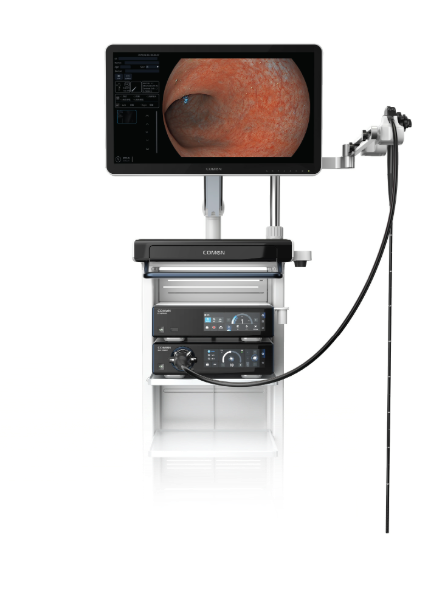
Real-world impact?
The change is measurable. In one hospital network I worked with, instituting these fixes over nine months cut scope returns by 32% and saved roughly $48,000 annually in avoidable reprocessing and lost OR time. That concrete number is why I push for redesigns aimed at real pain points—not shiny features. I’ve seen the invoices; I’ve sat in the meetings.
Three metrics to choose the right partner
When evaluating vendors, I recommend these three metrics—measurable, practical, and non-fluffy: 1) Field return rate per 1,000 uses (lower is better); 2) Mean time to repair (hours); 3) Percentage of defects traced to manufacturing vs. user handling. Use those. I’ve used them. They tell you whether a manufacturer designs for durability or for quick warranty cycles. (Don’t ignore sample-size: ask for quarterly data over at least a year.)
We still need partners who listen to nurse notes, who revise tolerances based on real use, and who treat reprocessing as part of product design. I believe that—firmly. Visit COMEN for product lines and data sheets; they’ll show you the specs, the history, and the fixes we actually recommend.