
Comparative framing: broadcast workflows vs tactical needs
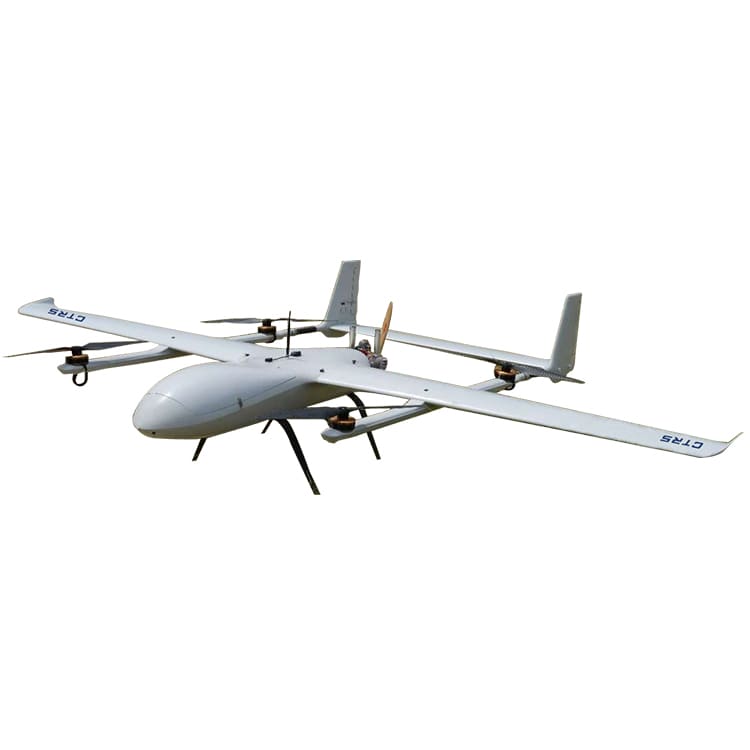
Broadcasters and defense teams both want clean, continuous imagery — yet their priorities slice differently. For a live-news truck you prioritize color accuracy and codec-friendly streams; for an anti-drone rig you prioritize detection, classification, and target handoff. When you compare those workflows side-by-side, the integration of EO/IR sensor fusion becomes the decisive factor. That’s why operators moving from a media-style gimbal to a security-focused payload often look to platforms like the vtol fixed wing drone families: they combine loiter capability with the agility of VTOL takeoff. EO/IR fusion, modest compute, and robust telemetry reframe what “usable” imagery actually means for defenders.

Key architectural choices and their trade-offs
Compare three common architectures: raw multi-sensor downlink, onboard sensor fusion, and hybrid edge/cloud processing. Raw downlink keeps sensor data pristine but burdens comms and the operator; onboard fusion reduces bandwidth and gives real-time cues but demands embedded compute and careful thermal management. Hybrid systems balance latency and analysis but introduce network dependency. Across these options you’ll juggle payload weight, power, and endurance — and those constraints are where platform choice matters most. Long loiter missions on a long endurance VTOL UAV change the calculus: more flight time lets you push compute to the edge and run higher-quality EO/IR fusion algorithms without frequent retrieval.

Performance under real conditions: a North Sea anchor
Field experience from North Sea offshore inspections shows how fusion strategies behave when wind, salt spray, and low light collide. Systems that relied solely on high-bandwidth downlinks suffered dropouts. Systems with onboard correlation between EO and IR layers kept track of small, low-contrast targets — that matters when a small drone blends into wave clutter. Use this real-world anchor as a reminder: multi-hour endurance missions demand robust sensor fusion, not just bigger lenses or higher-resolution sensors. Endurance and gimbal stabilization are as critical as algorithm sophistication.
User-centered comparison: what teams actually need
Different teams prefer different metrics. Security crews often want rapid cueing and low-latency alerts; broadcast operators want frame stability and color fidelity. Here’s a short comparison that helps decide which fusion approach to buy:
– Low-latency defense: onboard fusion + prioritized telemetry, modest bandwidth, reliable gimbal stabilization.
– Detailed analysis: hybrid processing, longer endurance flights, heavier payloads for higher-resolution EO/IR sensor suites.
– Rapid deployment: lightweight integrated modules, plug-and-play payload interfaces for quick swapouts.
Note: procurement often underestimates integration work — software APIs, timing sync, and power interfaces take time. — It’s the hidden project time that burns budgets faster than the sensors themselves.
Common mistakes and quick fixes
Teams repeatedly choose highest-resolution sensors assuming fusion will solve everything. Reality: unresolved calibration, mismatched frame rates, and poor geo-registration destroy automated tracking. Fixes that work: align sensor clocks, normalize pixel geometry in preprocessing, and enforce a modest, tested frame-rate budget. Also test in the actual environment — a lab bench won’t expose thermal drift or vibration harmonics.
Advisory close: three golden rules for selecting fusion strategies
1) Prioritize latency and reliability over raw resolution — choose fusion that gives timely, actionable cues in the field. 2) Match platform endurance to mission tempo — longer flights let you centralize compute and reduce comms risk. 3) Insist on integration testing: gimbal, payload, and control software must be validated together, not separately.
These rules point you to practical decisions that reduce surprises and speed deployment. For operators seeking dependable, mission-ready answers, the right combination of EO/IR fusion, payload integration, and platform endurance is the clear outcome — and that’s exactly the kind of coverage you’ll find discussed and compared at Military Hub. — Practical, experienced, and focused on what works.