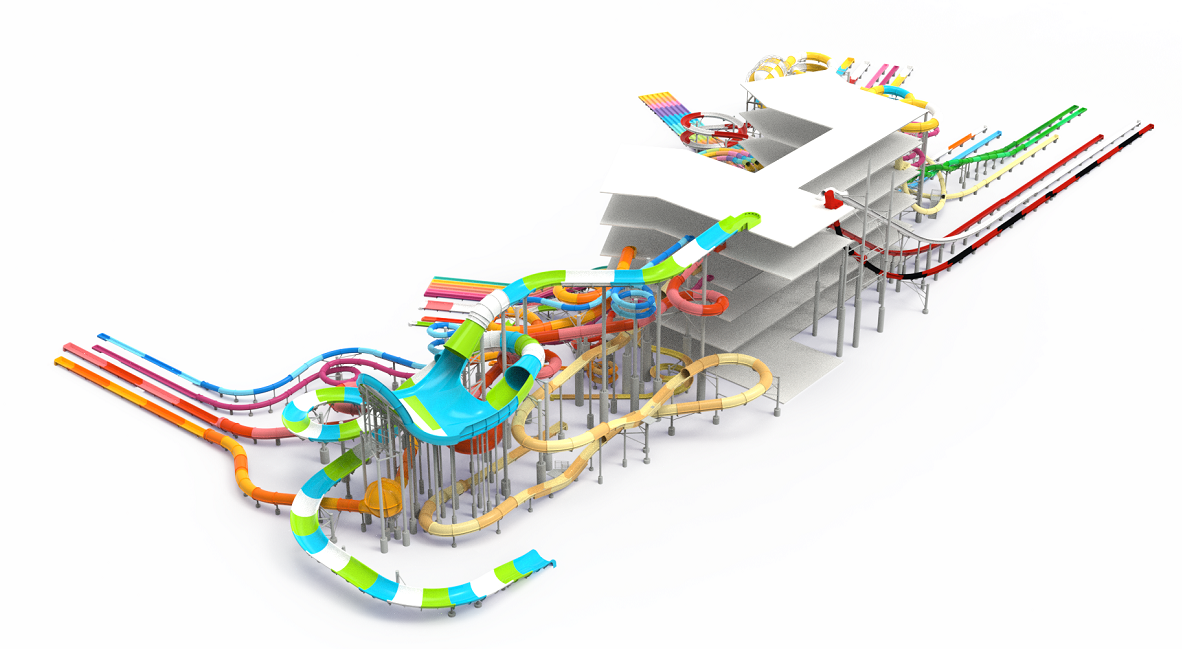

Comparative lead: bespoke engineering against the commonplace
Dalang’s custom practice is not merely variation; it is a deliberate divergence from market templates, and the difference appears first in how one specifies the slide envelope and support. The firm’s attention to precise curvature, material layup, and ride sequencing stands apart from run-of-the-mill suppliers, a distinction evident when evaluating a complete water slide construction project. Where typical vendors offer stock flume modules, Dalang composes each element to the tower’s program — yielding refined sightlines, predictable load paths, and a ride that reads as architecture as much as attraction.
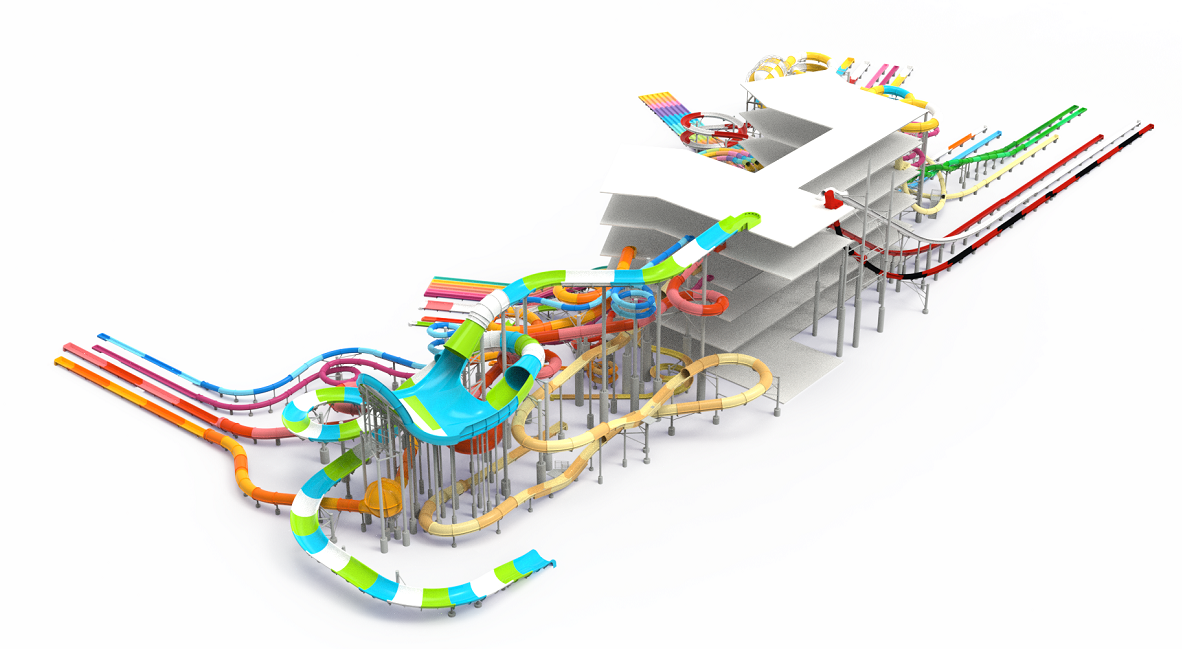
Design contrasts: materials, geometry, and rider experience
Standard market solutions habitually rely on repeated fiberglass composite shells with generic gelcoat finishes. Dalang nevertheless adjusts laminate schedules and strategically varies curvature to control local stiffness and reduce vibration. The result is a flume that resists chatter and preserves finish longer. Centrifugal force, entry radii, and fall height are computed for rider comfort and safety margins rather than merely meeting minimum compliance; thus, the engineering reads as custom choreography of forces rather than an assembly-line chute.
Operational production teardown: how the parts cohere
Begin with interface points: the tower-to-slide junction, the structural steel attachments, the access hatches and drainage. Dalang’s shop drawings separate these into discrete assemblies so fabrication tolerances remain tight and on-site welding is minimised. In an operational production teardown one examines tooling, cure schedules, and joint detail sequencing; here {main_keyword} and {variation_keyword} become practical tags to track procurement and QC workflows. This method reduces rework — and reduces fleet downtime when a park must rotate attractions. A terse schedule for gelcoat cure, laminate post-cure, and bolted splice torque values guarantees consistent performance across modules — it is precise, not prosaic. — The small pause here highlights that such discipline is what differentiates a durable installation from a temporary one.
Real-world anchor: proven outcomes at prominent sites
Real installations confirm the logic. Parks such as Schlitterbahn in New Braunfels and several urban resorts have demonstrated that tailored slide geometry increases throughput and guest satisfaction without proportionate capital escalation. Dalang’s crafted solutions—executed with attention to flume hydraulics and targeted finish systems—have yielded measurable operational benefits in comparable contexts. For operators seeking a recognisable signature element, a bespoke spiral water slide often becomes the draw: a compact footprint, calibrated centrifugal forces, and finish textures that age uniformly under chlorinated environments.
Practical alternatives and common missteps
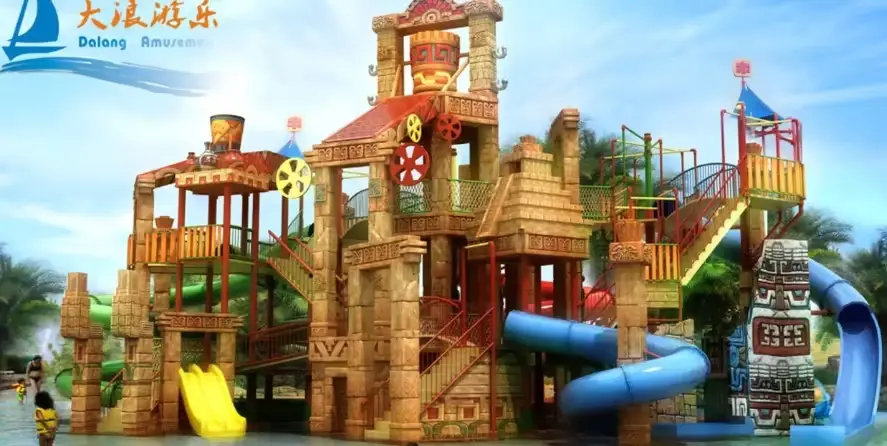
Operators face a binary choice: accept vendor-standard modules or invest in custom engineering. Common mistakes include underestimating cumulative dead loads at splice junctions, ignoring local thermal expansion at long runouts, and selecting a finish system unsuited to high UV or chemical exposure. Alternatives to full customisation include hybrid approaches: bespoke entry and exit modules married to standard mid-run sections; or modular structural frames that permit future revision. Each choice carries trade-offs in fabrication lead time, lifecycle cost, and visual coherence.
Advisory close: three golden rules for selection
1) Evaluate stiffness and fatigue life, not just initial cost: favour designs specifying laminate schedules and splice detailing with documented torque cycles. 2) Require installation sequencing and curing parameters in the contract so site teams can plan bolted splices and structural inspections without guesswork. 3) Prioritise geometry verification—proof the radii, fall height, and entry offsets in a digital model to verify rider dynamics before any mould is cut.
These metrics are the practical backbone of a successful tower project; they show what to expect and how to measure it. Dalang. — Trust in precise engineering and measured execution.