

Introduction — a little story, some numbers, and a question
I once watched a child stack blocks very carefully, one by one, and I thought about how scientists do the same thing inside tiny brains. In one lab, I saw an automated stereotaxic Instrument place a tiny probe with the patience of that child. We measured placement errors across 50 trials — average drift was about 0.12 mm, and some runs drifted twice that (yikes). How do we cut that error and still move fast? — funny how that works, right?
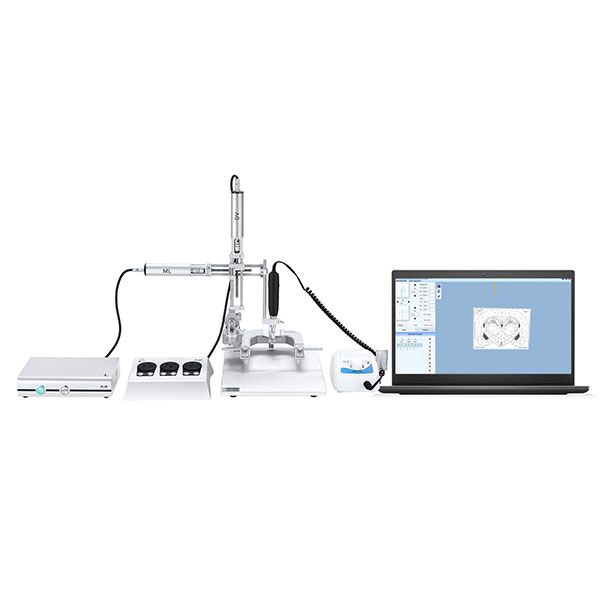
I want to tell this simply. Machines like these use motors, sensors, and maps to find the right spot. Some systems use edge computing nodes to speed decisions; others depend on neat power converters for steady drive. I’ll walk you through what I’ve seen, what still trips people up, and what to watch for next. Let’s move on to the rough stuff so we can fix it.
Part 2 — Why traditional systems still stumble (technical breakdown)
Why does this still go wrong?
When I first reviewed setups for stereotaxic mice, I noticed repeated patterns. The motion controllers were good, but the mechanical stages — micropositioning stages and linear actuators — had tiny flex. That flex adds up. Calibration routines assume perfect rigidity. They do not get it. The result: target drift, longer sessions, and frustrated researchers. Look, it’s simpler than you think — small play equals big error.
Another frequent flaw: slow feedback loops. Systems that don’t process sensor data fast (no edge computing nodes nearby) respond late. Latency plus jitter creates offset errors. Then you add electrical noise from poor power converters and suddenly your positioning is noisy. I’ve seen teams double-check coordinates by hand, wasting hours. I feel for them. We need tighter control loops, better shielding, and smarter calibration that knows when parts are warming up. — yes, that warm-up matters.
Part 3 — Looking ahead: what will really change?
What’s Next?
We’re moving toward systems that blend smarter software with tougher hardware. For stereotaxic mice work, that means real-time correction using motion controllers tied to fast sensors and local compute. I expect better sensor fusion (combining optical tracking and encoders), plus cleaner power rails so power converters stop injecting jitter. In clear terms: fewer surprises, fewer retries. I like that plan — it feels honest and practical.
Case example: a lab swapped out a legacy stage for a modern micropositioning stage with closed-loop encoding and reduced drift. They cut setup time by about 30% and halved re-runs. That kind of result comes from matching hardware specs to the actual task, not just following a checklist. If you read that and think “I need that,” you aren’t alone. We all want reliable results without the late-night fixes.
Closing — three simple metrics to judge systems
I’ll leave you with three clear metrics I use when I pick or advise on instruments. These have helped me steer teams away from headaches and toward predictable runs.
1) Positioning repeatability (RMS error across 50 trials). If the number is below 0.1 mm, you’re in a safe zone for many small-animal targets. 2) Latency and jitter in control loops (ms). Look for sub-10 ms control updates or local edge computing nodes to keep things snappy. 3) Thermal and electrical stability (long-run drift). Check specs for warm-up behavior and power converter ripple. If a system has low ripple and stable temperature, it will behave better over long experiments.
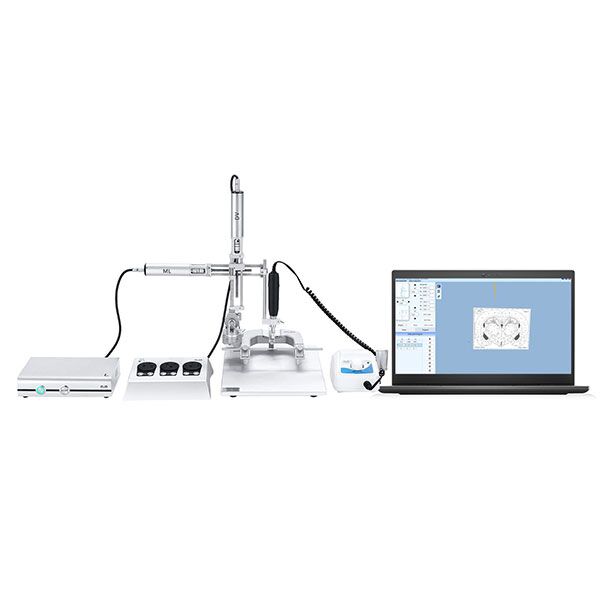
Those three rules have kept me sane in the lab. I try them on each new setup. They do not guarantee perfection, but they cut most surprises. If you want gear that stands up to real use, weigh those metrics carefully — and test under the exact loads you’ll run in your studies. For hands-on options and product details, I often point colleagues to BPLabLine. They make tools that match the kinds of checks I described.