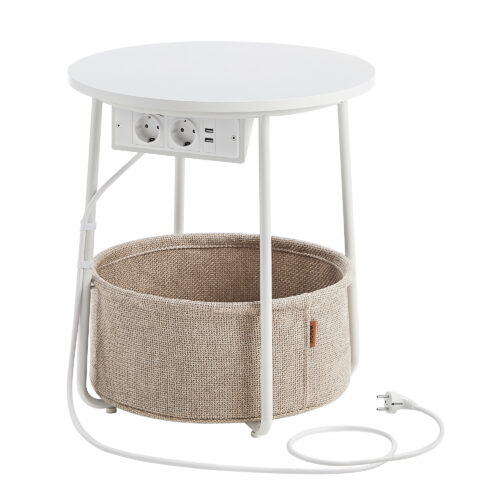

A Showroom Moment, A Bigger Choice
It started on a busy Saturday in Auckland. End table manufacturers were watching a pop-up floor fill up as fast as a nor’wester rolls in. The numbers are blunt: nearly half of buyers expect delivery inside a week, and about a third of returns happen due to wobble or a patchy finish. So, how do you balance speed and build—without losing the plot? Early signals point to a smarter partner mix, including a capable china end table manufacturer that can scale without bending your brand. On the factory side, CNC milling and powder coating lift consistency; on the digital side, edge computing nodes track defects in real time (sweet as for keeping things tidy). But here’s the kicker: data alone won’t fix a design that’s hard to assemble or a supply plan that drifts during peak.

Imagine a customer unboxing at home—tools out, ten minutes spare before school pickup. If the pre-drilled holes are off by a hair, or the feet don’t level on older timber floors, it’s a return waiting to happen. That’s sunk cost, aye. The choice between speed and soul feels stark, yet it doesn’t have to be. The real comparison sits in how suppliers handle variance and feedback loops—funny how that works, right? Let’s shift from showroom buzz to the hidden bits that trip teams up, then we’ll line up what’s next so you can choose with eyes open.
Under the Surface: Hidden Pain Points and Old Fixes That Don’t Hold
Where do the old fixes fall short?
Let’s be plain and technical for a minute. Many teams still rely on thicker panels or extra brackets to fight wobble. That can mask root issues like loose tolerance on jigs, soft MDF substrate, or leg geometry that amplifies racking. A solid china end table manufacturer will prove out repeatability with first-article reports and gauge studies, not just bigger screws. Edge computing nodes can flag drill drift at the station; power converters in LED or wireless-charging tops need thermal headroom, or you’ll see yellowing and early failures. Look, it’s simpler than you think: design for stiffness first, then lock process windows, then automate the checks.
Traditional “fix it in QC” thinking adds time, not certainty—and costs stack fast. Long kitting lists create SKU chaos; small hardware variances create big assembly pain at home. Instructions try to do the heavy lifting, but poor pilot holes or uneven powder coating thickness makes tightening feel gritty and wrong. The result? Customer doubts the brand before the table even stands. A better path sets torque specs, thread quality, and leveling tolerances early, then verifies with short-run pilots. Quick note—don’t forget feet: a 3-point leveling strategy often beats four cheap glides. It’s these quiet choices that cut returns and keep reviews tidy.
Comparative Edge: How Tomorrow’s Methods Change the Build
What’s Next
Now, let’s look forward and compare approaches. New technology principles are shifting the baseline. Digital twins mirror your end table from CAD through coating, so you can test leg angles, fastener load, and carton drops before metal meets jig. Vision systems—linked to edge nodes—measure hole positions and finish gloss in-line, not after the batch. Modular power converters snap into charging tops with a single harness, cutting rework and heat risk. When you source a wholesale end table, ask for traceable lot data and process capability on critical-to-quality features (top flatness, leg alignment, fastener pull-out). Semi-formal take, but clear: faster is fine when the variance is jailed—and your supplier shows the keys.
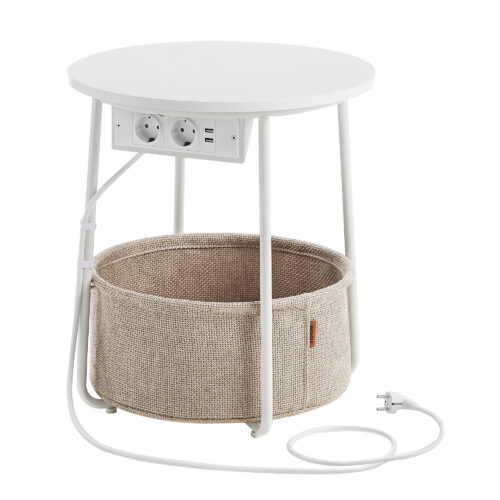
Real-world impact shows up in three places. First, stiffness-to-weight improves when leg sections and joinery are modelled, not guessed—less wobble, lighter ship weight. Second, finish delta-E stays tight when curing is profiled per rack, so colour stays uniform across runs—no “near black” that looks off in daylight. Third, assembly goes smoother when inserts and threads are spec’d for common hand torque; fewer stripped holes means fewer returns—surprisingly human, that. To choose well, use three metrics: delivery reliability at P95, defect rate per 100 units on field returns, and verified load rating with tip resistance. Keep them visible, compare quarterly, and adjust—done. If you keep that discipline, the next wave won’t feel like a gamble; it’ll feel like a plan. Find partners who speak the same language, share the same data, and stand by it, like SONGMICS HOME B2B.