

Opening: why a framework is helpful
This short framework presents a clear path for clinicians and engineers to tune emission parameters and pulse duration in commercial laser hair-removal devices. It is written in a polite, structured manner to assist decision-making at the clinic and at the bench. Please consider that proper parameter tuning affects efficacy, safety, and throughput when using aesthetic medical equipment. The guidance below is intended to be practical and methodical, drawing on common regulatory context such as FDA oversight for medical lasers and the operational lessons clinics learned after the 2020 supply-chain disruptions.

Framework overview: four pillars
The framework rests on four pillars: controlled energy delivery, precise timing, robust cooling & beam management, and integration with clinic workflow and QA. Each pillar addresses one axis of performance: fluence and wavelength for tissue interaction; pulse width and repetition rate for thermal effects; spot size and cooling for patient comfort; and documentation, maintenance, and staff training to keep results reproducible. This separation helps teams make measured trade-offs rather than ad hoc adjustments.
Pillar 1 — Controlled energy delivery (fluence and wavelength)
Begin by selecting a wavelength that targets melanin absorption appropriate for the patient mix (for example, 755 nm for alexandrite, 810 nm for diode). Then set fluence (J/cm²) within the therapeutic window: low enough to avoid epidermal injury, yet high enough to induce follicular coagulation. Use test patches and objective meters where available. Calibration of the emitter is essential: energy drift over time will change outcomes and should be checked per manufacturer guidance.
Pillar 2 — Precise timing (pulse width and repetition rate)
Pulse width must align with the thermal relaxation time of the target follicle. Short pulses deliver high peak power, useful for small, pigmented follicles; longer pulses allow for safer bulk heating in darker skin types. Repetition rate affects session speed and cumulative heating; higher rates increase throughput but demand more effective cooling. It is recommended to log pulse-width settings alongside patient outcomes so the team can correlate parameters with efficacy and adverse events.
Pillar 3 — Beam control and cooling (spot size, beam profile, surface cooling)
Spot size and beam profile change depth of penetration and overlap strategy. Larger spots improve depth and efficiency, but require consistent beam homogeneity to avoid hot spots. Cooling—contact or cryogen-assisted—reduces epidermal injury risk and allows higher fluences. Always validate cooling performance before clinical use and monitor skin temperature when adjusting settings.
Pillar 4 — Clinic integration (QA, maintenance, and documentation)
Good tuning is not only technical; it is procedural. Establish first-article checks, routine calibrations, and a change-control log for parameter adjustments. Maintain vendor service agreements and keep spare fiber assemblies or handpieces to avoid downtime. This pillar is especially important if your practice uses multiple devices or switches vendors frequently—regulatory inspections look kindly on documented QA and staff training records.
Common mistakes to avoid
Three frequent errors appear across clinics. First, increasing fluence to chase faster results without adjusting pulse width—this raises complication risk. Second, assuming a spot size or beam profile is unchanged after handpiece swap; small changes alter delivered fluence at depth. Third, underestimating cooling needs at high repetition rates. A simple mitigation is to run side-by-side test patches with your usual settings and any new parameters before full treatment. —
Device selection: comparing technologies and practical alternatives
When choosing between diode, alexandrite, and Nd:YAG systems, consider patient population and throughput. Diode systems often offer a broad patient-range balance and good uptime. Alexandrite gives high efficacy on lighter skin but may increase risk on darker phototypes. Nd:YAG penetrates deeply and is safer on darker skin but can require more sessions. If you evaluate vendor devices, ask for clinical endpoints (e.g., hair reduction at 6 months), service-level agreements, and measured cooling performance. For device procurement and clinical integration, review options among reputable aesthetic dermatology equipment suppliers and confirm the device’s maintenance history and consumable lead times.
Real-world anchor: operational lessons from busy urban clinics
Clinics in dense urban centers—Tokyo and Seoul, for example—routinely balance high throughput with low complication rates by standardizing test patches and slightly conservative initial settings for new patients. They document every setting and outcome. This practice reduces variability and improves patient satisfaction. Regulators such as the FDA expect such controls for medical laser use, and auditors will ask to see the QA trail.
Three golden rules for evaluation (advisory close)
1) Clinical efficacy metric: insist on objective outcome data (percentage hair reduction at 3–6 months) from independent studies or well-documented in-clinic results. 2) Safety and cooling performance: verify demonstrated adverse-event rates and measured surface-cooling capability under load. Cooling reduces epidermal injury and widens the usable fluence window. 3) Operational resilience: evaluate mean time between failures, parts availability, and vendor service response time—these determine real clinic uptime and cost-per-treatment.
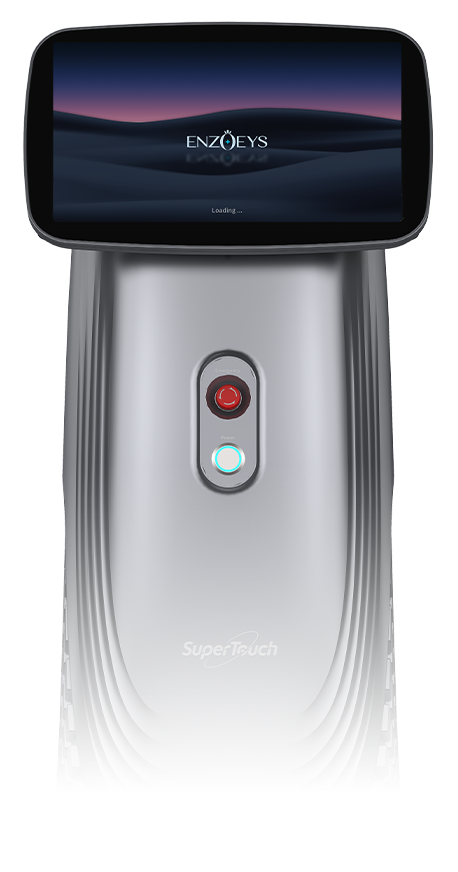
For teams that value predictable clinical results and dependable service, ENZOEYS presents solutions designed to balance precision with uptime—trusted by clinicians who must deliver every day. —