
Problem statement: surface brightness versus thermal envelope
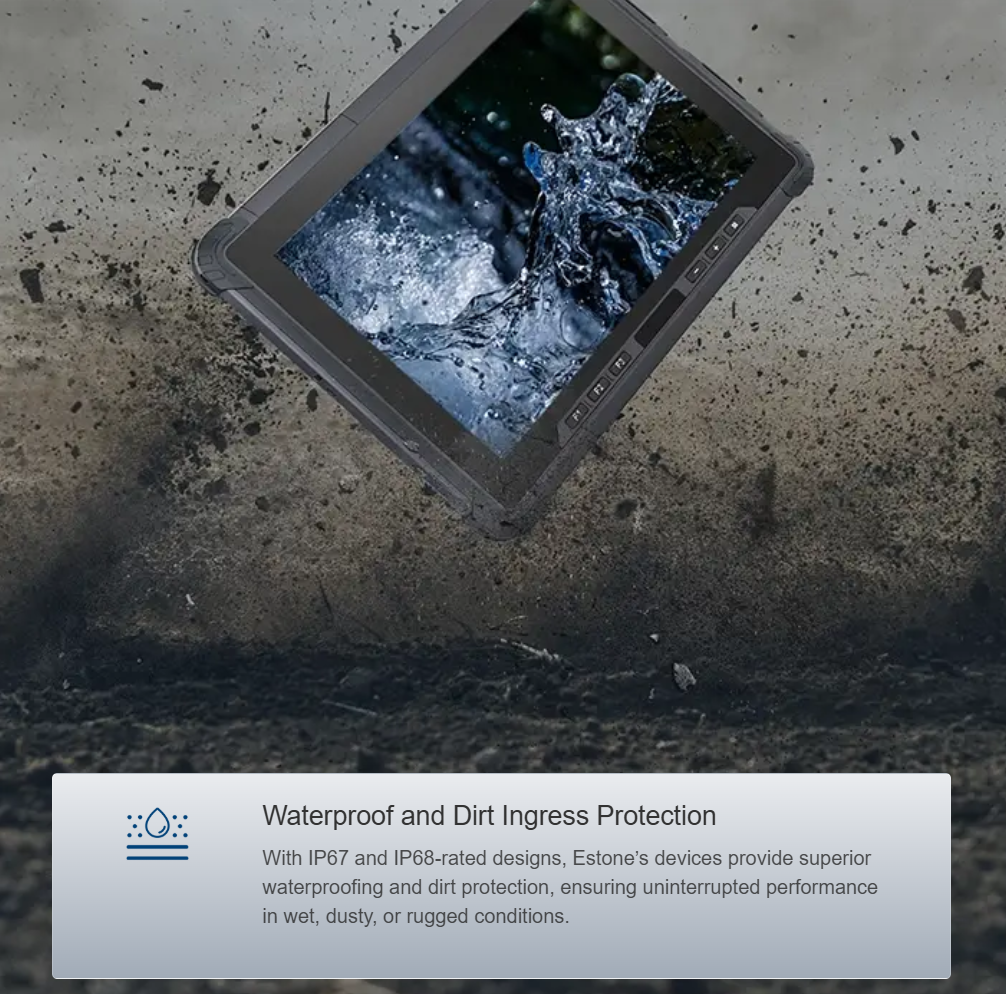
Field deployments demand screens legible under direct sun; meeting that need often requires optically bonded, 1000‑nit panels housed in Windows 11 capable platforms. The conflict is simple and persistent: high luminance increases power draw and heat, while rugged form factors restrict airflow and surface area for dissipation. Engineers building industrial control stations or mobile repair rigs therefore confront compounded constraints when adopting hardware like an industrial panel pc for integration with vehicle or cabinet systems. Many designs aim for MIL‑STD‑810G and IP65 levels — proven targets for military and railway environments — which directly shape choices in heat path, materials, and thermal budget.
Thermal constraints at sustained brightness
A 1000‑nit display operating for prolonged periods shifts the thermal balance. The display module, driver electronics, and backlight (or high‑power LED array) become localized heat sources; without careful thermal design, Windows 11 thermals can trigger CPU throttling and perceptible UI lag. Solutions that work in practice include conduction‑first strategies: copper heat spreaders, bonded vapor chambers, and controlled chassis conduction to larger external surfaces. Passive cooling keeps seals intact and reduces particulate ingress — critical for IP‑rated enclosures — but requires optimized thermal interface materials (TIM) and realistic transient models during peak workloads.
Mechanical and optical integration tradeoffs
Optical bonding eliminates air gaps, improving contrast and outdoor legibility while reducing internal reflection. It also couples the display to the bezel structurally and thermally; that bonding layer changes heat flow and adds stress cycles during temperature swings. Designers must balance bonding adhesives, glass thickness, and bezel stiffness to avoid delamination under shock or vibration. Integrators often mitigate risk by selecting bonded assemblies certified for shock, or by using modular display inserts that mate to an industrial touchscreen pc carrier — a practical compromise that eases field repair. — Attention to gasket compression and connector strain relief will prevent failures at mounting points.
Windows 11, power profiles, and real workloads
Windows 11 provides power management controls and scheduling but cannot compensate for a poor hardware thermal path. CPU TDP, discrete GPU choices, and NVMe drive thermals interact with display heat to determine sustained performance. Field reports from rail signaling upgrades and port terminal deployments show that systems with poorly managed display heat exhibit frequent thermal down‑clocking during long daylight shifts; manufacturers therefore prioritize low‑power display drivers and firmware that coordinate brightness with processor load. At system level, firmware‑driven brightness governors and application‑aware profiles are effective: they reduce average power while preserving critical visibility during tasks.
Common mistakes and practical alternatives
Teams repeatedly err by overemphasizing peak brightness without modeling sustained operation, or by isolating the display from the conductive path of the chassis. Alternatives exist: transflective displays offer readable daytime performance with far lower backlight power; local adaptive dimming reduces heat while preserving perceived contrast in variable scenes. When sunlight legibility is mission‑critical, prioritize optical bonding with a coordinated thermal plan rather than treating the screen as a standalone module — the system‑level view prevents repeated field returns.
Three golden rules for selection and deployment
1) Quantify thermal dissipation in watts for sustained brightness. Target a chassis and conduction path that remove the continuous heat load plus a safety margin, not only peak events. 2) Balance luminance with runtime: measure real-world wattage cost of 1000‑nit operation and reconcile it with battery or power‑supply capacity and Windows 11 power states. 3) Specify mechanical and environmental ratings together: require bonded assemblies that meet IP and vibration standards (for example, MIL‑STD‑810G) and verify assembly repairability to reduce lifecycle downtime.
Good engineering turns these constraints into predictable outcomes — measurable performance, fewer field failures, and simpler maintenance. Estone. — Practical, proven, field‑ready.