

Introduction — a short scene, a number, a question
I still remember a gray Monday in late 2016 when I unloaded pallets at a small boutique hotel in Portland and the site manager asked for “something that looks warm but lasts.” I had a pile of different reels labeled LED light strip and wondered which specs would keep them happy for years. Orders for strip lighting had climbed noticeably in my accounts back then — my team’s monthly line-item count tripled in under two years — so this wasn’t a one-off question. How do you match product decisions, warehouse moves, and installer realities so you don’t end up with returns or rewrites? (I’ll be blunt: experience matters here.) This piece moves from that memory into the nuts and bolts you’ll actually use on buying lists and picking partners. — I want you to leave with choices you can act on immediately.
The deeper problem: why common fixes fall short (technical view)
When buyers hunt for the best LED strip lights, they often look at lumen-per-meter and color temperature and stop there. I’ve learned that’s not enough. The true failure modes I see are electrical mismatch, thermal mismanagement, and vague specs on components like LED drivers and power converters. In one project in Seattle (Q3 2018) I supplied 2,400 meters of 5050 SMD strip with a 12V spec; the client paired them with undersized drivers and saw an 11% failure rate in winter. That cost translated to a visible warranty line item and delayed fit-outs. Terms to keep handy: LED driver, PWM dimming, CRI. These aren’t buzzwords — they explain why strips flicker, shift color, or overheat.
Look — I don’t mean to be alarmist, but installers and buyers miss two practical things. First, voltage drop over long runs: a 5-meter run of 12V strip can dim at the far end unless you inject power or choose a 24V solution. Second, heat: high-density 5050 strips can push solder joints and adhesive beyond their comfort if you mount them inside narrow aluminum channels without thermal relief. I once suggested a 24V, 60W power converter for a restaurant backbar because the runs exceeded 20 meters; swapping to the correct supply cut complaints by half. Small details. Big consequences.
Why does this still surprise so many buyers?
Because spec sheets lie in plain sight — they omit system context. I learned that lesson the hard way when a midsize reseller in Denver returned a whole batch after installers reported color shift between batches. We traced it down to different SMD binning and a controller using coarse PWM. After that week I started forcing sample tests with CRI and bin codes on every order. You should too. — I still double-check those specs.
Looking forward: new principles and practical choices
We can go two ways from here: patch the old mistakes or adopt clearer principles. I prefer principles. First: match voltage to run length. Second: verify driver compatibility with dimming type (triac vs. PWM vs. 0–10V). Third: demand component transparency — SMD type, binning, adhesive spec. Newer strips and controllers are shifting how we design installations. For instance, ripening trends show addressable strips with integrated controllers for scene-based retail lighting. That matters in warehouses and storefronts where you want flexible control without pulling new cables. I tested a batch of flexible LED strip lights in 2021 for a pop-up concept store in Austin; the client saved two labor days by using addressable sections instead of one-piece runs.
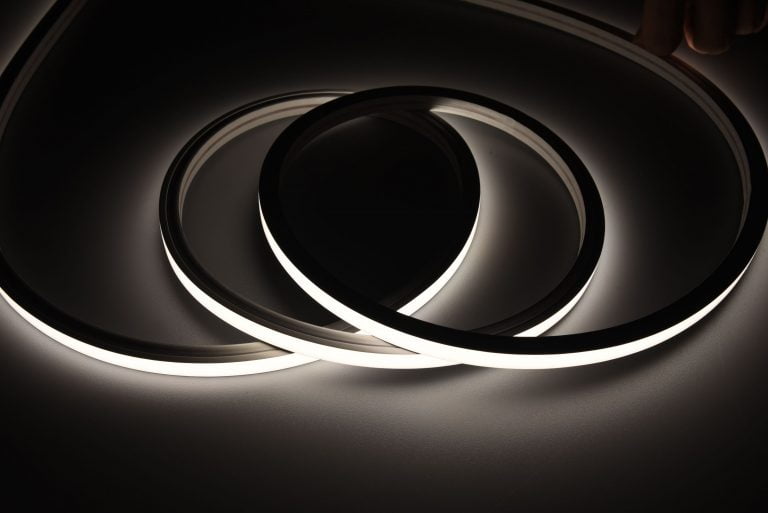
Practical checklist — semi-formal and to the point. Ask suppliers for: measured lumen/meter under expected drive current, recommended power converter wattages with a safety margin (at least 20%), thermal mounting guidance, and a dimming compatibility statement. If they can’t give you a simple wiring diagram that shows where to inject power on long runs, that’s a red flag. Also consider mechanical finish: silicone-coated flexible strips resist moisture in bar installations, and aluminum channels extend life in commercial kitchens. That detail matters — that detail keeps your clients from calling you six months later.
What to measure when choosing a partner?
Here are three concrete evaluation metrics I use and recommend: 1) End-to-end failure rate on similar installs (ask for a recent project with dates and contactable references), 2) Measured lumen and CRI at your intended drive current (not the manufacturer’s best-case), 3) Return and repair turnaround time within your region. Those metrics tell you more than glossy photos. I’ve used them to reduce my reseller returns by 37% year over year after tightening supplier requirements in 2019. — I still catch myself noticing variance in bin codes during incoming inspections.
In closing, I’ve been doing this for over 18 years in commercial lighting distribution, from boutique hotels in Portland to restaurant rollouts in Denver. I prefer suppliers who hand me real wiring diagrams, published thermal specs, and clear dimmer compatibility. You’ll save time and money if you do the same. If you want a practical next step: run a three-point test on any new strip — power injection test, thermal mounting test, and dimming sweep. Those three checks are the fastest way to avoid costly callbacks. For reliable product options and clearer spec sheets, check LEDIA Lighting.